Introduction
Automotive interior lighting has evolved significantly over the years, driven by advancements in technology and changing consumer preferences. One of the most impactful innovations is Plastic Optical Fiber (POF), which has revolutionized how light is distributed within vehicle interiors. This article delves into the intricacies of POF in automotive lighting systems, examining its benefits, applications, and future potential.
What is POF?
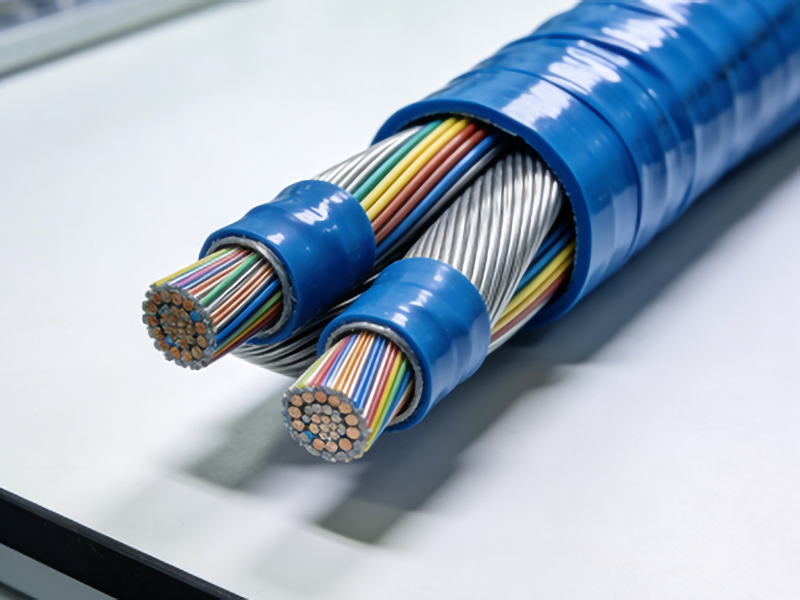
Plastic Optical Fiber (POF) is a type of optical fiber made from plastic rather than glass. Unlike traditional glass fibers used in telecommunications, POF is designed for shorter distances and lower data rates but excels in delivering high-quality light. Its flexibility, durability, and cost-effectiveness make it an ideal choice for automotive applications.
Technical Parameters of POF
– Core Diameter: Typically ranges from 0.5 mm to several millimeters, allowing efficient light transmission.
– Cladding Thickness: Usually between 0.1 mm to 0.2 mm, which enhances the fiber’s flexibility and protection against external factors.
– Transmission Loss: Minimal loss over short distances (up to 100 meters), making it suitable for in-vehicle applications.
Applications of POF in Automotive Lighting
Ambient Lighting
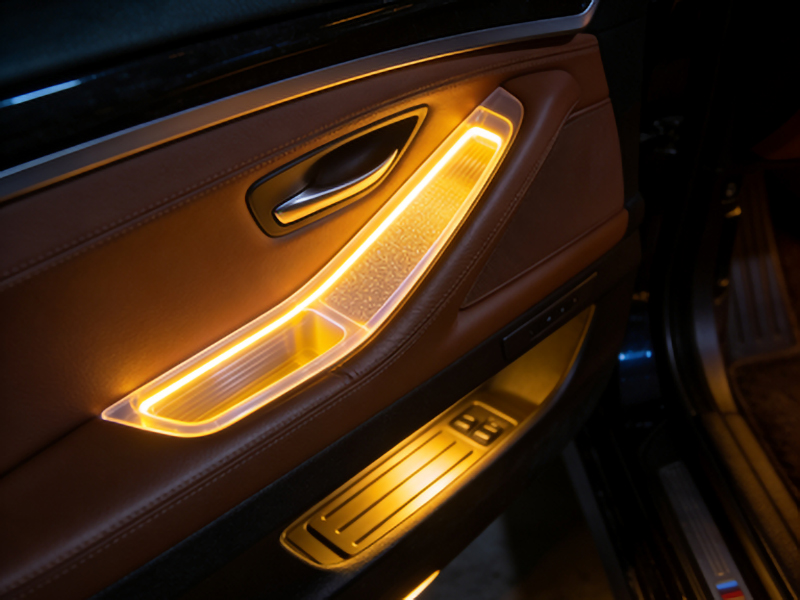
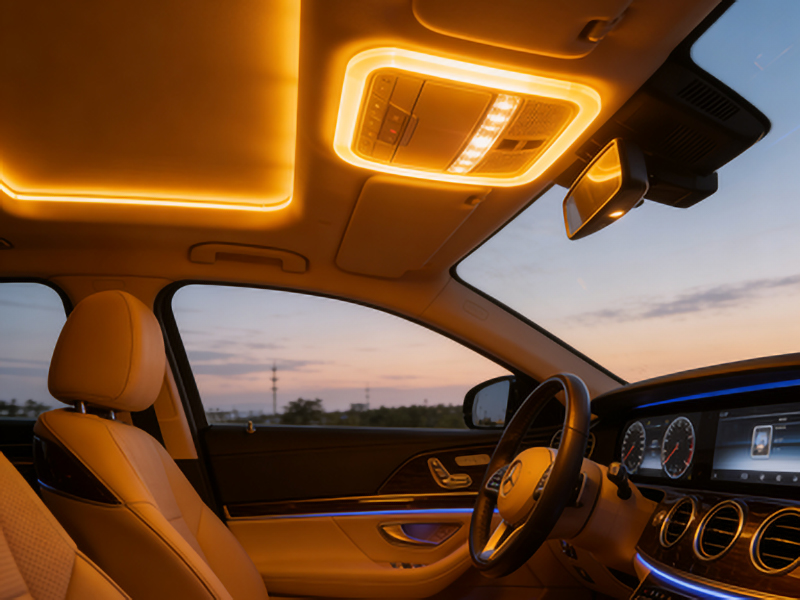
POF is widely used in ambient lighting systems, providing a soft, diffused glow that enhances the cabin’s aesthetic appeal. These systems often feature multi-color options, allowing drivers and passengers to customize their lighting experience based on mood or preference.
Reading Lights
In vehicles equipped with reading lights, POF ensures consistent brightness across the entire length of the light strip, eliminating shadows and providing optimal illumination for reading or other tasks.
Door Entry Lighting
POF is used in door entry lighting to illuminate the footwell area when doors are opened. This improves safety by helping passengers locate their seats quickly, especially in low-light conditions.
Benefits of POF in Automotive Lighting
1. Flexibility: POF can be easily bent and shaped to fit the complex contours of vehicle interiors without affecting light transmission.
2. Durability: Resistant to vibrations, temperature fluctuations, and moisture, making it ideal for the harsh automotive environment.
3. Cost-Effective: Lower production costs compared to glass fibers, reducing overall system expenses.
4. Light Weight: POF is significantly lighter than traditional lighting solutions, contributing to vehicle weight reduction and improved fuel efficiency.
5. Aesthetic Appeal: Provides a sleek, modern look that complements the interior design of high-end vehicles.
Technical Considerations for Implementing POF
– Connectorization: Ensuring proper connectors are used to maintain optical integrity without introducing signal loss.
– Routing: Careful routing is essential to prevent physical damage and ensure smooth light distribution.
– Integration with Control Systems: Compatibility with vehicle’s electronic control units (ECUs) for seamless operation and user interaction.
Challenges and Solutions
Challenge: Signal Loss Over Long Distances
While POF excels in short-distance applications, signal loss becomes significant over longer distances.
Solution: Limiting the length of POF cables to within optimal ranges or using additional amplification techniques where necessary.
Challenge: Temperature Sensitivity
POF’s performance can degrade under extreme temperatures commonly encountered in automotive environments.
Solution: Using specially formulated plastics that maintain optical properties across a wide temperature range (-40°C to +125°C).
The Future of POF in Automotive Lighting
As technology continues to advance, POF is expected to play an even more critical role in automotive interiors. Potential future developments include:
– Integration with smart lighting systems that adapt to ambient conditions and driver preferences.
– Enhanced color variety and dynamic lighting effects for a more personalized experience.
– Use of POF in exterior lighting solutions, expanding its application beyond the vehicle interior.
Conclusion
Plastic Optical Fiber (POF) has transformed automotive interior lighting by offering a flexible, durable, and aesthetically pleasing solution. Its ability to deliver high-quality light efficiently makes it a cornerstone of modern vehicle design. As technology evolves, POF will undoubtedly continue to innovate, enhancing both functionality and user experience in the automotive industry.