Introduction
Plastic Optical Fiber (POF) has emerged as a transformative technology in the realm of military and national defense communications. Offering exceptional performance, durability, and flexibility, POF is becoming an essential component in modern defense infrastructure. This article explores the applications, benefits, and technical aspects of POF in military settings.
What is Plastic Optical Fiber?
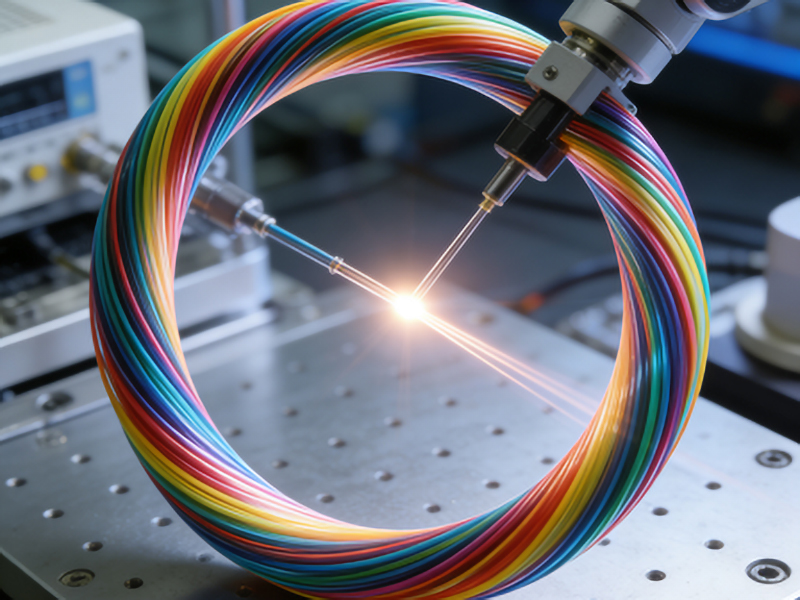
Plastic Optical Fiber (POF) is a type of fiber optic cable that uses plastic as its core material instead of glass. Unlike traditional glass-based optical fibers, POF is more flexible, cost-effective, and easier to install. These characteristics make it ideal for various military applications where reliability and adaptability are paramount.
Technical Specifications
Core Material
– Type: Plastic (PMMA or other polymers)
– Diameter: Typically 0.5mm to several millimeters
– Cladding: Usually made of a different plastic with lower refractive index
Bandwidth and Data Rate
– Bandwidth: Up to 1 GHz·km
– Data Rate: Supports high-speed data transmission up to multi-gigabit levels
Loss Characteristics
– Attenuation: Approximately 50 dB/km at 650 nm wavelength
– Connector Loss: Less than 1 dB per connection
Applications in Military and National Defense
Tactical Communications
POF is widely used in tactical communication systems to enable secure, high-speed data transmission between military units. Its lightweight and flexible nature make it ideal for mobile deployments.
Sensor Systems
In defense applications, POF serves as an effective medium for transmitting sensor data from distributed systems such as radar, sonar, and surveillance equipment. The fiber’s ability to handle multiple wavelengths allows for simultaneous operation of various sensors without interference.
UAVs and Drones
Unmanned Aerial Vehicles (UAVs) benefit from POF’s lightweight and high-bandwidth capabilities. It enables real-time data transfer between the drone and command centers, enhancing mission efficiency and situational awareness.
Undersea Communications
POF is used in undersea communication networks for submarines and underwater sensors. Its resistance to water ingress and ability to maintain signal integrity at great depths make it a reliable choice.
Advantages of Plastic Optical Fiber
Cost-Effective
POF is significantly cheaper to produce than traditional glass-based optical fibers, making it an economical solution for large-scale military deployments.
Flexible and Lightweight
The plastic core allows POF to bend more easily without signal loss, which is crucial in dynamic military environments. Its lightweight nature reduces the overall weight of communication systems, improving portability.
High Data Transmission Speeds
With support for multi-gigabit data rates, POF ensures that critical information is transmitted quickly and reliably, even in high-stress scenarios.
Resistance to Electromagnetic Interference (EMI)
POF is immune to electromagnetic interference, making it ideal for use in environments with heavy electronic equipment or during electronic warfare operations. This characteristic enhances communication security and reliability.
Challenges and Limitations
While POF offers numerous advantages, there are some challenges that need to be addressed:
– Signal Attenuation: Higher attenuation compared to glass fibers limits the maximum distance for effective data transmission without signal amplification.
– Temperature Sensitivity: Some plastic materials used in POF can degrade under extreme temperatures, affecting performance in harsh military environments.
– Connectorization Issues: The need for precise connectors and terminations can complicate installation and maintenance in field conditions.
Future Trends and Developments
The ongoing advancements in polymer technology are expected to enhance the performance of POF further. Innovations such as high-refractive-index plastics and improved manufacturing processes could lead to lower attenuation, higher bandwidths, and better temperature resistance. Additionally, integration with emerging technologies like 5G and IoT is likely to expand the role of POF in military communication systems.
Conclusion
Plastic Optical Fiber is revolutionizing military and national defense communications by providing a cost-effective, flexible, and high-performance solution. Its ability to operate in challenging environments and support high-speed data transmission makes it an invaluable asset for modern defense systems. As technology continues to evolve, POF will play an increasingly critical role in ensuring secure and reliable communication networks for military operations worldwide.