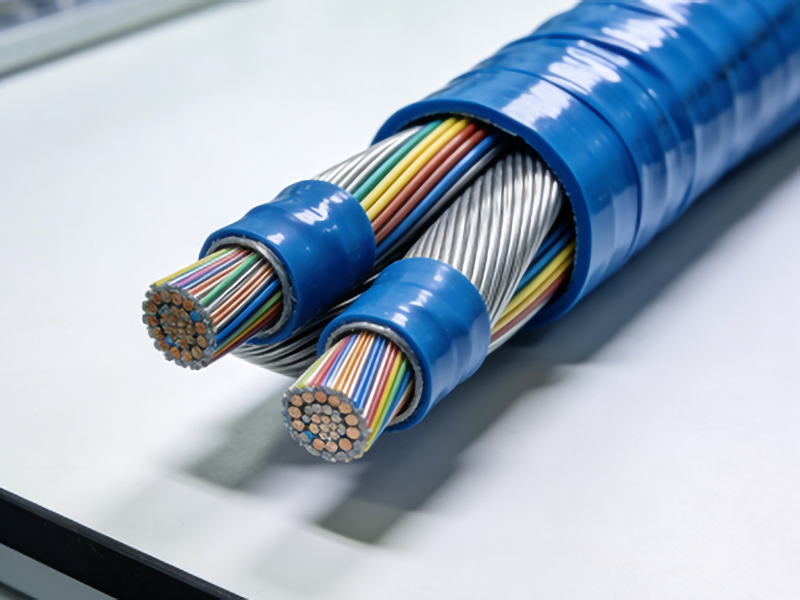

Optical fiber has revolutionized the field of security monitoring by offering unparalleled speed, reliability, and security. This article delves into how optical fiber is utilized in modern surveillance systems, its benefits over traditional copper cables, and essential factors to consider when implementing such solutions.
Applications of Optical Fiber in Security Monitoring
1. High-Speed Data Transmission: Optical fibers enable the rapid transfer of large amounts of data, making them ideal for real-time video surveillance and alarm systems.
2. Long-Distance Communication: They are used in perimeter security systems to cover vast areas efficiently without signal degradation.
3. Immunity to Electromagnetic Interference (EMI): Fiber optics are not affected by EMI, ensuring consistent performance even in environments with high electromagnetic activity.
4. Secure Data Transmission: Optical fibers are inherently secure as they do not radiate signals, making eavesdropping nearly impossible.
Advantages of Using Optical Fiber
– High Bandwidth: Supports higher data rates compared to copper cables.
– Low Signal Loss: Minimal attenuation allows for longer transmission distances without the need for repeaters.
– Lightweight and Flexible: Easier to install in various environments, including challenging terrains.
– Resistance to Corrosion: Unlike copper, optical fibers are not susceptible to rust or corrosion.
Technical Parameters for Optical Fiber in Security Systems
1. Core Diameter: Typically ranges from 8.3 µm (single-mode) to 50 µm (multi-mode). Single-mode fibers are preferred for long-distance transmissions due to lower dispersion.
2. Cladding Diameter: Usually 125 µm, which helps in guiding the light within the core.
3. Attenuation: Measured in dB/km, with values typically between 0.3 and 0.5 dB/km for single-mode fibers at wavelengths around 1550 nm.
4. Dispersion: Important factor affecting signal quality over long distances. Single-mode fibers have lower dispersion compared to multi-mode.
5. Operating Wavelength: Commonly used in the near-infrared range (1310 nm and 1550 nm) for optimal performance and reduced attenuation.
Key Considerations for Implementation
– System Design: Ensure the fiber network is designed to handle the required bandwidth and distance specifications.
– Connector Types: Choose appropriate connectors like SC, LC, or ST based on system requirements and compatibility.
– Fiber Type Selection: Decide between single-mode and multi-mode fibers depending on transmission distance and data rate needs.
– Installation Best Practices: Proper installation techniques are crucial to prevent damage and ensure optimal performance. This includes avoiding sharp bends and maintaining cleanliness during termination.
– Cost Considerations: While fiber optics offer long-term benefits, initial setup costs can be higher than copper systems. Evaluate the total cost of ownership over time.
Conclusion
Optical fiber technology plays a pivotal role in enhancing security monitoring systems by providing high-speed, secure, and reliable communication. Its ability to handle large data volumes with minimal signal loss makes it an indispensable component for modern surveillance infrastructure. By understanding the technical parameters and implementation considerations, organizations can leverage optical fiber effectively to bolster their security measures.