Introduction
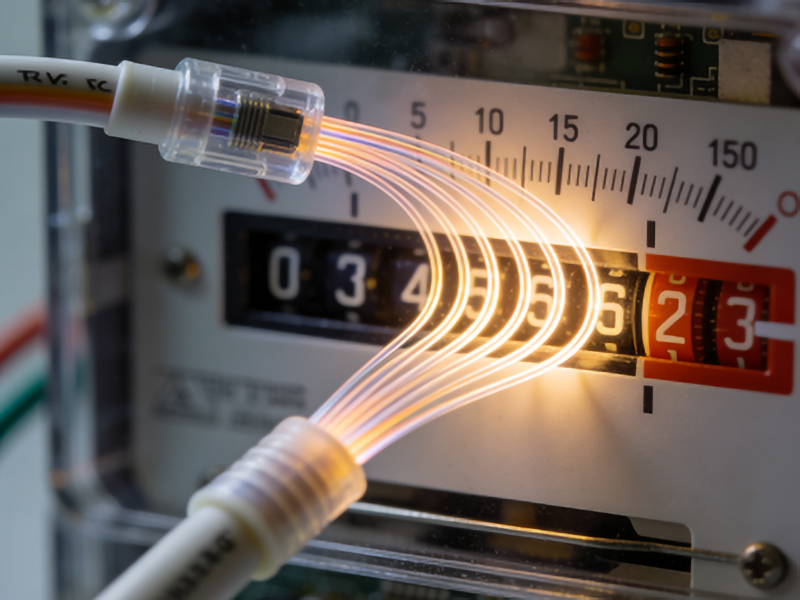
Plastic Optical Fiber (POF) has emerged as a game-changer in the field of power meter reading. This innovative technology leverages light to transmit data, offering numerous benefits over traditional methods. In this article, we will explore how POF is revolutionizing power metering and its implications for the energy sector.
What is Plastic Optical Fiber?
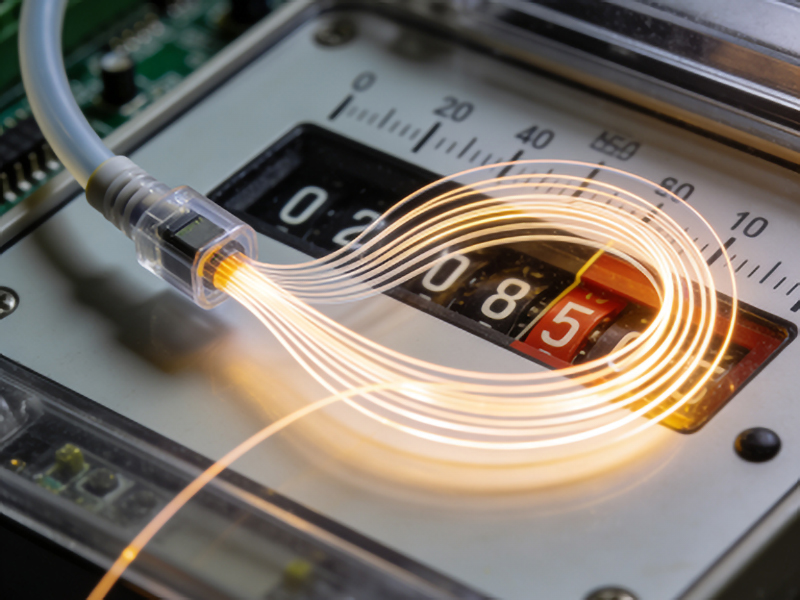
Plastic Optical Fiber (POF) is a type of optical fiber made from plastic materials instead of glass. It consists of a core and cladding, where the core guides light signals, and the cladding prevents signal loss through total internal reflection. Unlike glass fibers, POF is flexible, easy to handle, and cost-effective, making it ideal for various applications, including power metering.
Key Features of Plastic Optical Fiber
1. High Data Transmission Speed: POF supports fast data rates, ensuring real-time monitoring of power consumption.
2. Low Signal Loss: The fiber’s design minimizes signal degradation over long distances.
3. Cost-Effective: POF is more affordable than glass fibers due to its plastic composition and simpler manufacturing process.
4. Flexibility: Its flexibility allows easy installation in various environments without worrying about breakage.
5. Resistance to Interference: Unlike copper wires, POF is immune to electromagnetic interference (EMI), ensuring reliable data transmission.
Applications of Plastic Optical Fiber in Power Metering
1. Smart Grids
In smart grids, POF plays a crucial role in enabling efficient communication between different grid components. By transmitting data on power usage and distribution, POF helps optimize energy flow and reduce losses. This leads to better load management and enhanced overall grid performance.
2. Advanced Metering Infrastructure (AMI)
POF is integral to AMI systems that automate meter reading, billing, and monitoring. These systems rely on reliable communication channels to gather data from multiple meters across a wide area. POF ensures secure and efficient data transmission, enabling utility companies to monitor consumption patterns in real time.
3. Remote Monitoring Systems
With POF, power meters can be remotely monitored without the need for physical visits. This reduces operational costs and allows utility providers to respond quickly to issues such as power outages or equipment malfunctions. The ability to access real-time data also aids in predictive maintenance, improving system reliability.
Technical Parameters of Plastic Optical Fiber
When selecting POF for power metering applications, several technical parameters must be considered:
– Attenuation: Measured in decibels per kilometer (dB/km), attenuation indicates the signal loss over distance. Lower values are preferable for longer transmission distances.
– Bandwidth: The range of frequencies that POF can transmit effectively, measured in megahertz (MHz). Higher bandwidth supports faster data rates.
– Core Diameter: Typically 1 mm or larger, the core diameter affects the fiber’s ability to gather and transmit light. Larger cores are more efficient for applications requiring high power transmission.
– Numerical Aperture (NA): A measure of the fiber’s light-gathering capability. Higher NA allows more light to enter the fiber, improving signal strength.
Advantages of Using Plastic Optical Fiber in Power Meter Reading
1. Enhanced Data Security
POF is inherently secure as it does not emit electromagnetic radiation, making data interception difficult. This ensures that sensitive power consumption data remains protected from cyber threats.
2. Improved Accuracy
The high bandwidth and low signal loss of POF result in more accurate meter readings, reducing errors in billing and energy usage calculations.
3. Reduced Maintenance Costs
Due to its durability and resistance to environmental factors like temperature fluctuations and moisture, POF requires minimal maintenance compared to traditional copper wiring.
4. Environmental Benefits
POF is eco-friendly as it consumes less energy during manufacturing and has a lower carbon footprint than glass fibers. Additionally, the reduced need for physical inspections lowers fuel consumption and emissions associated with meter reading.
Challenges and Considerations
While POF offers numerous advantages, there are challenges to consider:
1. Distance Limitations: Compared to glass fibers, POF has higher attenuation, limiting its effective transmission distance. This may require additional repeaters or amplifiers for long-distance applications.
2. Compatibility Issues: Ensuring compatibility between POF and existing infrastructure can be challenging. Adapter modules and connectors might need to be installed to integrate POF into current systems seamlessly.
3. Installation Expertise: While POF is easier to handle than glass fibers, proper installation techniques are still necessary to avoid signal degradation or system failures.
Future Outlook
The adoption of Plastic Optical Fiber in power meter reading is expected to grow significantly as the demand for smarter and more efficient energy management systems increases. With advancements in manufacturing processes and ongoing research into improving POF’s performance, its role in the energy sector will only expand. Utilities are increasingly recognizing the benefits of POF, driving its integration into new projects and expansions.
Conclusion
Plastic Optical Fiber is transforming power meter reading by providing a reliable, secure, and cost-effective solution for data transmission. Its unique advantages over traditional methods make it an ideal choice for modern energy monitoring systems. As technology continues to evolve, POF will play an even more critical role in shaping the future of power metering, contributing to smarter grids and sustainable energy practices.