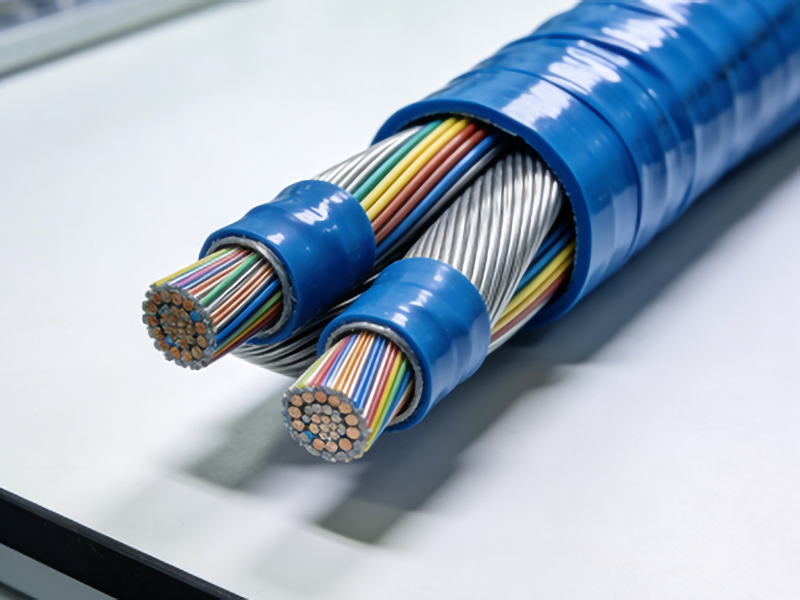
Introduction
Optical fibers have long been synonymous with high-speed data transmission in telecommunications. However, recent advancements have unlocked a new frontier: their use in architectural design to transmit light, creating stunning illuminated structures and spaces. This article delves into the technical intricacies and practical applications of light-transmitting optical fibers (LTOFs) in modern architecture.
The Basics of Light-Transmitting Optical Fibers
Optical fibers are hair-thin strands of glass or plastic designed to transmit light through total internal reflection. In traditional telecommunications, they carry encoded data signals. For architectural applications, the focus shifts entirely to light transmission.
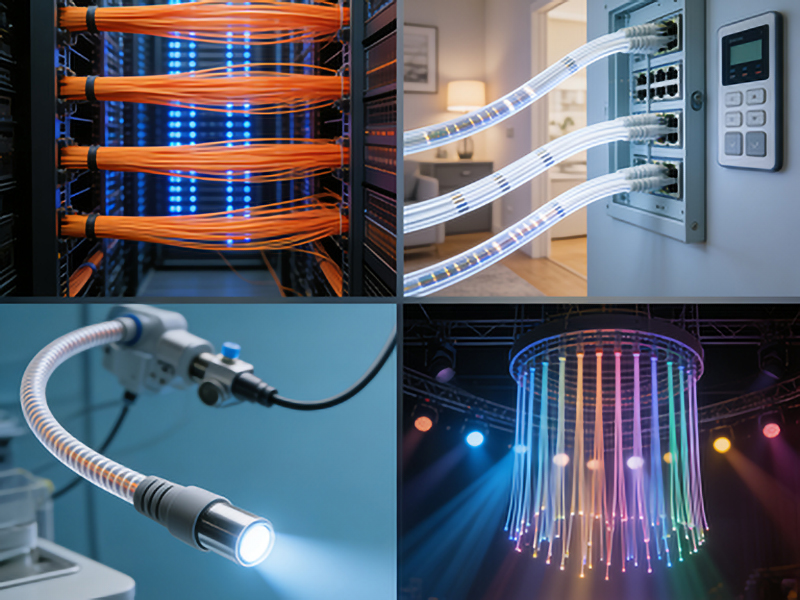
Key Technical Parameters
1. Core Diameter: Typically ranges from 50 micrometers (for high brightness) to several hundred micrometers. Thicker cores allow more light to pass through but may reduce flexibility.
2. Cladding: Surrounds the core and ensures total internal reflection, preventing light loss. The cladding’s refractive index is lower than the core’s, facilitating efficient light transmission.
3. Numerical Aperture (NA): Indicates the fiber’s ability to capture incoming light. A higher NA means a wider acceptance angle for light entering the fiber, enhancing brightness.
4. Attenuation: Measures signal loss over distance, typically in decibels per kilometer (dB/km). Lower attenuation is crucial for maintaining consistent illumination across long fibers.
5. Flexibility: Fibers can be rigid or flexible, depending on their application. Flexible fibers are ideal for architectural designs requiring bends and curves without light loss.
Applications in Architectural Design
LTOFs offer unparalleled design flexibility and aesthetic appeal. They enable architects to illuminate spaces with uniform, customizable lighting while maintaining structural integrity.
1. Interior Lighting Solutions
– Light Channels: Embedded within walls, ceilings, or floors, LTOFs can distribute light evenly across a space, creating a seamless ambient glow without visible light sources.
– Customizable Patterns: By arranging fibers in specific patterns, architects can project intricate designs on surfaces, adding dynamic visual elements to interiors.
2. Exterior Lighting and Facades
– Fiber Optic Trees: These installations use LTOFs to simulate the look of a tree with glowing branches, offering an eco-friendly alternative to traditional lighting.
– Building Facade Illumination: Fibers can be embedded in building facades to create luminous patterns or dynamic light shows, enhancing the visual impact of structures during evenings.
3. Sustainable Architecture
LTOFs contribute to energy efficiency by reducing reliance on conventional lighting systems. Since they transmit natural or LED-generated light with minimal loss, they consume less power compared to traditional illumination methods.
Challenges and Considerations
While LTOFs present exciting opportunities, their implementation requires careful planning.
– Installation Complexity: Embedding fibers into structures demands precise placement to ensure optimal light distribution.
– Maintenance Needs: Fibers are delicate; improper handling or environmental factors can lead to breaks or reduced efficiency over time.
– Cost Considerations: Initial installation costs may be higher than traditional lighting systems, though long-term energy savings can offset these expenses.
The Future of Optical Fiber in Architecture
As technology advances, expect LTOFs to become more integrated into architectural design. Innovations such as smart fibers that adapt to ambient light conditions or fibers with built-in sensors for additional functionality could redefine how we interact with illuminated spaces.
Conclusion
Light-transmitting optical fibers are ushering in a new era of architectural possibilities. By combining technical precision with artistic vision, architects can create spaces that are not only visually stunning but also environmentally responsible. As the technology continues to evolve, LTOFs will undoubtedly play a pivotal role in shaping the future of sustainable and innovative design.