Introduction

Urban lighting plays a crucial role in the functionality and aesthetics of modern cities. As cities grow and become more interconnected, the need for efficient, sustainable, and innovative lighting solutions becomes increasingly important. One such solution that has gained significant attention is plastic optical fiber (POF). This article delves into how POF is transforming urban lighting projects, offering insights into its benefits, applications, and future potential.
What is Plastic Optical Fiber?
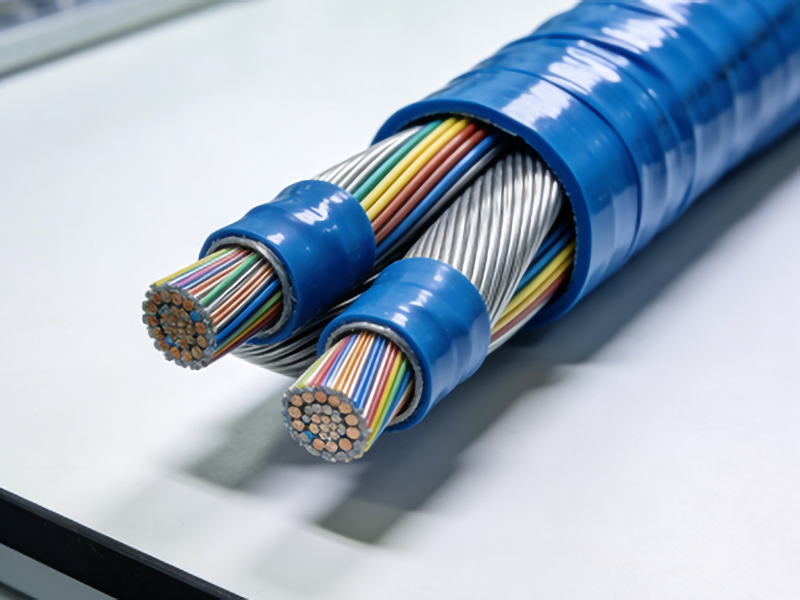
Plastic optical fiber (POF) is a type of optical fiber made from high-quality plastic materials. Unlike traditional glass optical fibers, which are widely used in telecommunications, POF is designed for shorter-distance communication and illumination purposes. It consists of a core made of polymethyl methacrylate (PMMA) or similar plastic, surrounded by a cladding layer that reflects light back into the core. This design allows for efficient transmission of light over relatively short distances.
Key Technical Parameters
– Core Diameter: Typically ranges from 0.5 mm to 1 mm
– Cladding Thickness: Usually between 0.25 mm and 0.75 mm
– Numerical Aperture (NA): Approximately 0.48 to 0.52
– Attenuation Coefficient: Around 1 dB/m at visible wavelengths
– Temperature Range: Operates effectively from -20°C to +80°C
Benefits of Plastic Optical Fiber in Urban Lighting
High Energy Efficiency
One of the standout advantages of POF is its high energy efficiency. By utilizing light-emitting diodes (LEDs) as the light source, POF systems consume significantly less power compared to traditional lighting solutions like fluorescent or incandescent lamps. This makes POF an ideal choice for cities aiming to reduce their carbon footprint and lower operational costs.
Low Maintenance Costs
POF-based lighting systems require minimal maintenance. LEDs have a much longer lifespan than conventional bulbs, reducing the frequency of replacements. Additionally, the fiber optic cables are durable and resistant to environmental factors such as moisture, UV radiation, and temperature fluctuations, further minimizing maintenance needs.
Flexible Installation
The flexibility of plastic optical fibers makes them easy to install in various urban settings. Unlike rigid glass fibers, POF can be bent without breaking, allowing for versatile routing through complex infrastructure. This adaptability is particularly beneficial for retrofitting older buildings or integrating lighting systems into challenging urban environments.
Enhanced Lighting Quality
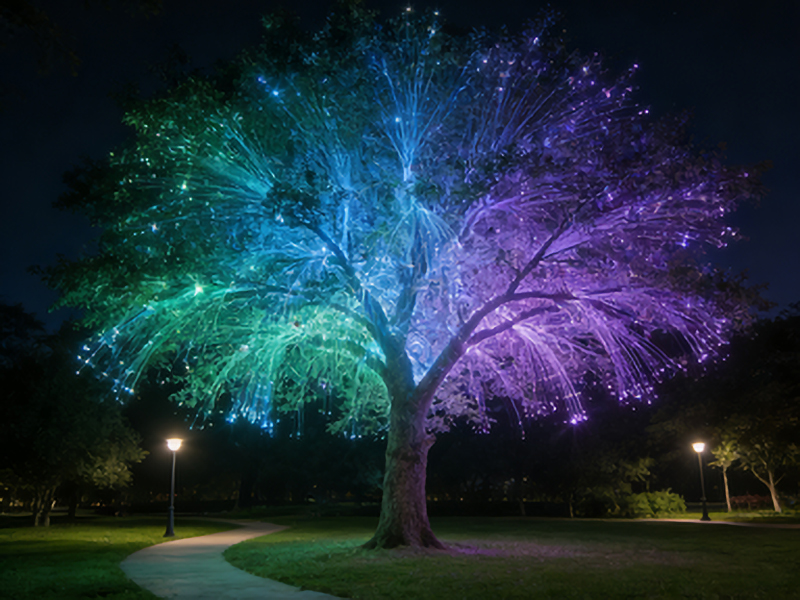
POF offers superior lighting quality compared to traditional systems. The ability to transmit bright, vibrant colors ensures that urban spaces are illuminated with a high level of clarity and precision. This is especially important for aesthetic purposes, such as highlighting architectural features or creating dynamic lighting effects in public areas.
Applications of Plastic Optical Fiber in Urban Lighting
Street Lighting
POF is increasingly being used for street lighting in urban areas. By connecting LED light sources to multiple fiber optic cables, cities can achieve uniform and efficient illumination along roads and pathways. This setup not only enhances safety but also reduces energy consumption significantly.
Architectural Illumination
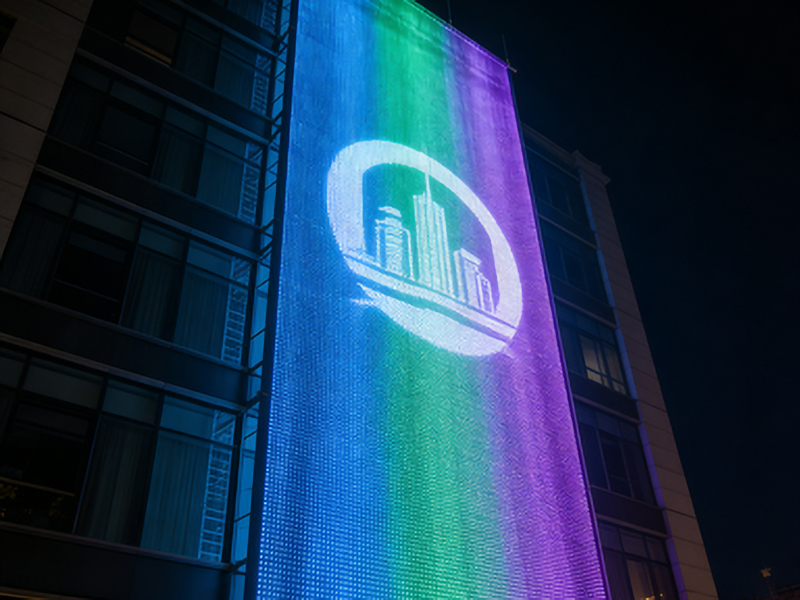
The flexibility of POF makes it ideal for architectural illumination projects. Whether it’s highlighting the contours of a historic building or creating intricate lighting patterns on modern structures, POF provides unparalleled design possibilities. The ability to control light intensity and color allows architects and designers to craft visually stunning urban landscapes.
Traffic Lighting Systems
In traffic management, timing and reliability are critical. POF-based systems offer fast data transmission and low latency, making them suitable for synchronizing traffic lights across intersections. This improves traffic flow, reduces congestion, and enhances overall road safety in urban areas.
Challenges and Considerations
While plastic optical fiber presents numerous advantages, there are challenges that need to be addressed:
– Signal Loss: Although POF is more efficient than traditional systems, signal loss over longer distances can still occur. This limits the practical length of fiber runs without additional amplification or repeaters.
– Cost: The initial installation cost of POF-based lighting systems can be higher compared to conventional solutions. However, long-term savings in energy and maintenance often offset these upfront expenses.
– Compatibility: Ensuring compatibility between different components, such as LEDs and fiber optic cables, is crucial for optimal performance. Proper design and quality control are essential during installation.
Future Trends and Innovations
The future of plastic optical fiber in urban lighting looks promising, with ongoing advancements in technology. Developments such as:
– Smart Lighting Systems: Integration of POF with IoT (Internet of Things) devices enables real-time monitoring and adjustment of lighting conditions. This can lead to even greater energy savings and improved efficiency.
– Miniaturization: Advances in manufacturing techniques are allowing for smaller, more efficient fiber optic cables, expanding the range of applications.
– Color Tunability: Enhanced color-tunable LEDs paired with POF will provide greater flexibility in creating dynamic lighting scenarios, adding another layer of functionality to urban spaces.
Conclusion
Plastic optical fiber is revolutionizing urban lighting projects by offering a combination of energy efficiency, low maintenance costs, and superior lighting quality. Its versatility and adaptability make it an ideal solution for various applications in smart cities. As technology continues to evolve, POF will undoubtedly play an even more significant role in shaping the future of urban illumination. Cities that adopt POF-based lighting systems are not only enhancing their infrastructure but also contributing to a more sustainable and connected urban environment.