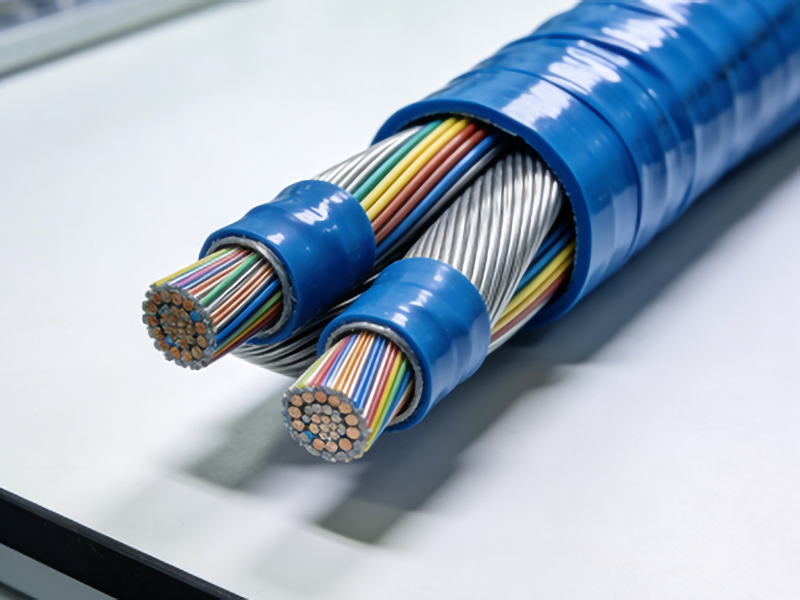
Introduction to Halogen-Free Flame-Retardant Plastic Optical Fiber
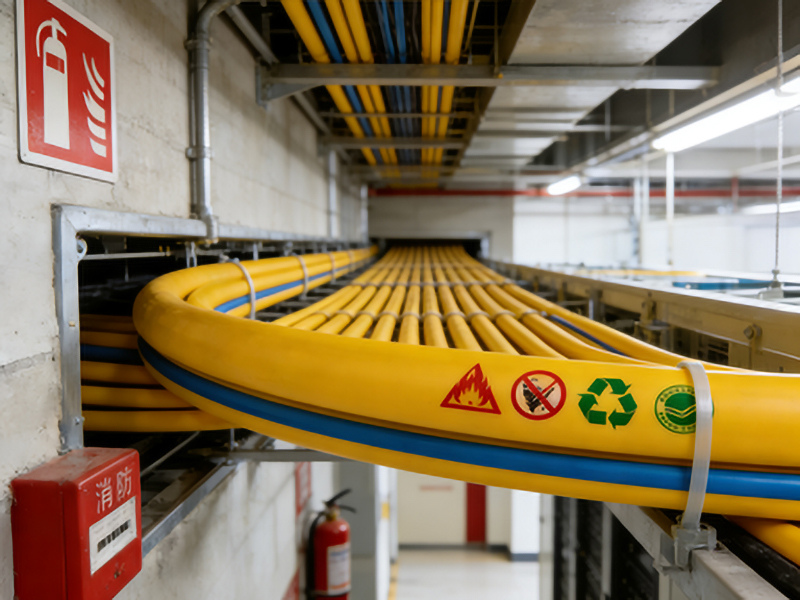
In today’s increasingly connected world, optical fiber technology plays a pivotal role in data transmission. Among the various types of optical fibers available, Plastic Optical Fiber (POF) has gained significant attention due to its flexibility, ease of installation, and cost-effectiveness. However, safety concerns, particularly regarding toxic smoke release during a fire, have driven innovation in POF formulations. This article explores the concept of Halogen-Free Flame-Retardant Plastic Optical Fiber, its technical aspects, and its growing applications.
Why Halogen-Free?
Traditional optical fibers, especially those based on polymethyl methacrylate (PMMA) and polystyrene (PS), can release hazardous halogenated compounds (like hydrogen chloride, HCl) when burned. These gases are toxic, corrosive, and pose severe risks to human health and the environment. As safety standards have evolved, the demand for optical fibers that do not rely on halogens for flame retardancy has grown substantially.
The term “Halogen-Free” refers to optical fibers that do not contain chlorine or bromine in their core, cladding, or flame retardant additives. Instead, they utilize alternative flame-retardant mechanisms and materials. The absence of halogens significantly reduces the potential for toxic smoke generation during a fire, contributing to safer evacuation routes and environments.
Flame-Retardant Properties
Flame retardancy is a critical safety feature for any material used in construction, electronics, and communication infrastructure. For POF, achieving flame retardancy without relying on halogens requires innovative approaches. The key mechanisms include:
* Intumescence: Some halogen-free flame retardants cause the material to swell and form a char layer when exposed to heat, insulating the underlying material and reducing heat transfer.
* CO2 Release: Certain non-halogen additives decompose to release carbon dioxide, which dilutes the oxygen in the combustion zone, thereby inhibiting flame spread.
* Inorganic Fillers: Materials like aluminum hydroxide (ATH) or magnesium hydroxide (MH) act as flame retardants by decomposing to absorb heat and release water vapor, cooling the material and diluting flammable gases.
* Phosphorus Compounds: Phosphorus-based flame retardants can promote char formation and deplete flammable components in the material.
Commonly used halogen-free flame retardant systems in POF include polymeric flame retardants, intumescent additives, and various inorganic fillers. The effectiveness of these systems is measured by standard fire tests, such as IEC 60332, IEC 60695, and ASTM E84.
Technical Parameters
The performance of Halogen-Free Flame-Retardant POF is evaluated based on several key parameters:
| Parameter | Metric | Typical Value (Example) |
|—————————|———————————|———————————————|
| Flame Spread Index (FSI) | ASTM E84 | Class 1 or Class 2 (Class 1 being best) |
| Smoke Density (ESCAR) | IEC 61033 / ASTM E6066 | Low Smoke Release Index (e.g., < 50) | | Toxicity of Smoke | ISO 5660 / EN 13823 | Low Toxicity, Reduced Hydrogen Cyanide (HCN) | | Hydrogen Halide Emissions | EN 50390 / ISO 15179 | Zero or Negligible HCl, HF | | Flame Retardancy | IEC 60332-1-6 | 600°C flame contact without dripping or flaming | These parameters ensure that the fiber meets stringent safety requirements while maintaining its optical performance.
Environmental Impact
Beyond immediate safety, halogen-free POF offers environmental benefits. The reduction or elimination of halogenated flame retardants minimizes the release of persistent organic pollutants (POPs) that can accumulate in the environment and bioaccumulate in living organisms. Furthermore, many halogen-free flame retardant systems are based on more sustainable and recyclable materials, aligning with growing environmental regulations and circular economy principles.
Applications
The unique combination of safety, performance, and compliance with environmental standards makes Halogen-Free Flame-Retardant POF suitable for a wide range of applications:
* Building and Construction: Ideal for horizontal and vertical cabling in residential, commercial, and institutional buildings, where safety in case of fire is paramount.
* Data Centers: Used for high-speed data transmission within and between server racks, requiring reliable connectivity and safe infrastructure.
* Automotive: Increasingly used in vehicle networking for infotainment, safety systems, and electric vehicles, where flame retardancy and low smoke emission are critical.
* Industrial Automation: Suitable for control systems, sensor networks, and machine-to-machine communication in factories.
* Consumer Electronics: Employed in home networking, IoT devices, and entertainment systems.
Challenges and Future Directions
Despite the advantages, the development and adoption of halogen-free flame-retardant POF face some challenges:
* Cost: Initially, halogen-free solutions can be more expensive than traditional halogen-based ones.
* Performance Trade-offs: Balancing flame retardancy with optical performance, mechanical strength, and processing characteristics requires ongoing research.
Future research directions include developing more efficient flame retardant additives, improving the recyclability of POF, enhancing the fire performance in extreme conditions, and reducing the overall cost.
Conclusion
Halogen-Free Flame-Retardant Plastic Optical Fiber represents a significant advancement in optical fiber technology. By eliminating toxic halogens, these fibers offer enhanced safety, reduced environmental impact, and compliance with modern regulations. As the demand for safer, more sustainable communication infrastructures grows, halogen-free POF is poised to play an increasingly important role in various sectors. Its adoption is driven by the collective efforts of material scientists, engineers, and safety regulators to create a better, safer digital world.