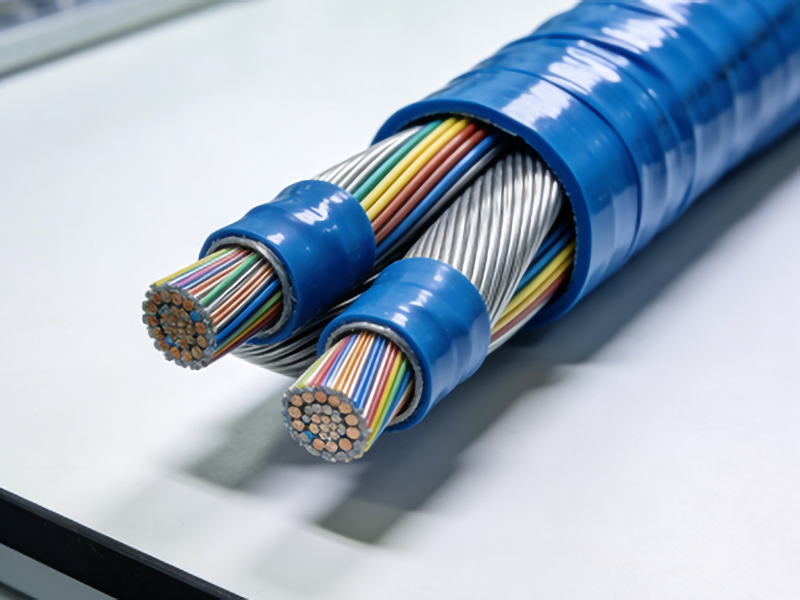
Overview of Plastic Optical Fiber (POF)
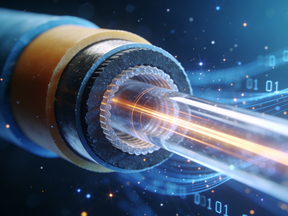
Plastic Optical Fiber (POF) is a type of fiber optic cable that uses plastic as its core material instead of glass. This innovative technology offers several advantages over traditional glass-based optical fibers, making it an attractive solution for various applications in telecommunications and data transmission.
Types of Plastic Optical Fibers
1. Step-Index Fiber: The simplest form of POF, characterized by a uniform refractive index across the core. It is ideal for short-distance communication due to its high numerical aperture (NA) and ease of coupling.
2. Graded-Index Fiber: Offers improved performance over step-index fibers by gradually varying the refractive index from the center to the edge of the core, reducing signal distortion over longer distances.
3. Microstructured POF: Features a complex microstructure within the fiber core, enabling enhanced control over light propagation and opening new possibilities for sensing applications.
Technical Parameters of Plastic Optical Fiber
– Core Diameter: Typically ranges from 0.5 mm to several millimeters, much larger than glass fibers, simplifying coupling and alignment processes.
– Numerical Aperture (NA): Higher NA in POF allows for a wider acceptance angle, making it easier to couple light into the fiber.
– Attenuation: While higher than glass fibers, recent advancements have significantly reduced attenuation, improving signal quality over longer distances.
– Bandwidth: Supports high bandwidth capabilities, suitable for both analog and digital communication systems.
Applications of Plastic Optical Fiber
1. Automotive Industry: Used in vehicles for data transmission within the car’s network, offering immunity to electromagnetic interference (EMI) and reduced weight compared to copper cables.
2. Medical Field: Employed in endoscopic devices for high-resolution imaging due to its flexibility and biocompatibility.
3. Data Centers: Ideal for short-distance, high-speed data transmission within server racks or data centers, enhancing efficiency and reducing latency.
4. Consumer Electronics: Found in devices like flat-screen TVs and computer monitors for internal signal routing.
5. Telecommunications: Used as a cost-effective alternative for last-mile connections in fiber-to-the-home (FTTH) networks.
Advantages of Plastic Optical Fiber
– Cost-Effective: Lower production costs compared to glass fibers make POF an economical choice for various applications.
– Flexibility and Ease of Use: The larger core size and high NA simplify the coupling process, reducing the need for precise alignment.
– Lightweight and Durable: Offers excellent mechanical strength and resistance to environmental factors, making it suitable for harsh conditions.
– Immunity to EMI: Unlike copper cables, POF is immune to electromagnetic interference, ensuring reliable data transmission in noisy environments.
Challenges and Limitations
Despite its advantages, Plastic Optical Fiber faces certain challenges:
1. Higher Attenuation: Compared to glass fibers, POF has higher signal loss over longer distances, limiting its use to shorter communication links.
2. Temperature Sensitivity: Some plastic materials used in POF can be sensitive to temperature changes, affecting performance stability.
3. Limited Bandwidth Potential: While advancements have improved bandwidth capabilities, POF still lags behind glass fibers in high-frequency applications.
Future Trends and Innovations
The future of Plastic Optical Fiber looks promising with ongoing research focused on:
1. Improved Materials: Development of new plastics with lower attenuation and higher thermal stability to expand application possibilities.
2. Nanotechnology Integration: Incorporating nanotechnology to enhance the optical properties of POF, enabling better signal transmission over longer distances.
3. Smart Fibers: Integrating sensors into POF for real-time monitoring applications in industries like healthcare and automotive.
4. Mass Production Techniques: Innovations in manufacturing processes to further reduce costs and increase production efficiency.
Conclusion
Plastic Optical Fiber (POF) represents a significant advancement in optical communication technology, offering a cost-effective, flexible, and durable solution for various applications. While it faces challenges such as higher attenuation and temperature sensitivity, ongoing research and development are continuously improving its performance and expanding its potential uses. As technology evolves, POF is poised to play an increasingly important role in the future of data transmission systems.