Introduction
Optical fiber has revolutionized the way information is transmitted across long distances with unmatched speed, reliability, and security. In the realm of military defense, optical fiber technology plays a pivotal role in ensuring secure and resilient communication networks. This article delves into the intricacies of military defense optical fiber, exploring its importance, applications, technical specifications, challenges, and future advancements.
The Importance of Optical Fiber in Military Defense
Military operations rely heavily on seamless communication between command centers, deployed units, and intelligence agencies. Traditional copper-based communication systems are prone to interference, signal degradation, and vulnerabilities to eavesdropping. In contrast, optical fiber utilizes light signals instead of electrical currents, offering several advantages:
– High Bandwidth: Optical fibers can transmit vast amounts of data simultaneously, supporting high-definition video conferencing, real-time sensor data, and secure voice communications.
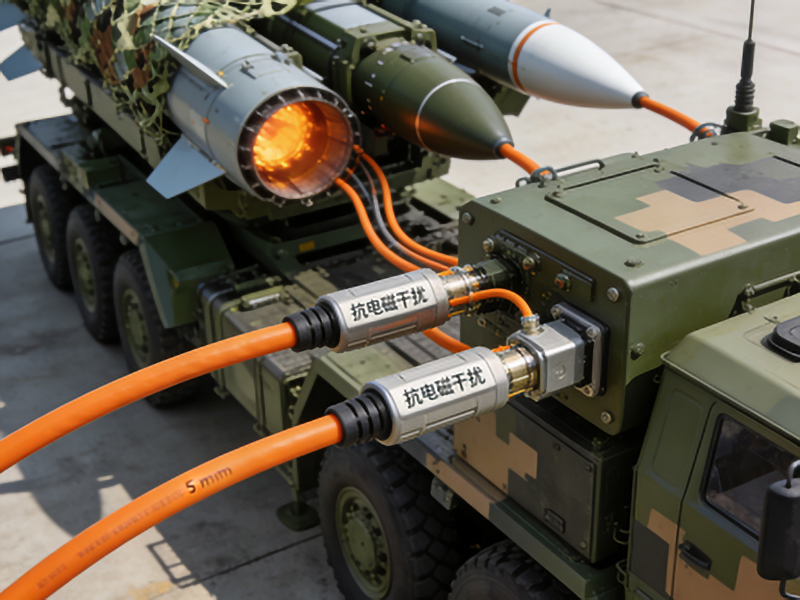
– Resistance to Interference: Unlike copper wires, optical fibers are immune to electromagnetic interference (EMI), ensuring reliable communication even in harsh environments with multiple electronic devices.
– Security: Fiber optic communication is inherently more secure because it’s difficult to tap into without detection. Additionally, advanced encryption techniques can be layered on top of the physical security provided by optical fiber.
Technical Specifications and Parameters
When designing military-grade optical fiber systems, several technical parameters must be considered:
1. Fiber Type
– Single-Mode Fiber (SMF): Ideal for long-distance communication due to its ability to transmit signals over thousands of kilometers without significant loss.
– Multi-Mode Fiber (MMF): Suitable for shorter distances, commonly used within military bases or command centers for local area networks (LANs).
2. Connector Types
Common connectors include:
– SC Connectors: Known for their durability and ease of use in harsh environments.
– ST Connectors: Popular for their push-pull design, offering quick connections.
– LC Connectors: Small form factor, ideal for high-density applications.
3. Cable Armor
Military optical fibers often require robust protection against environmental factors and potential threats. Options include:
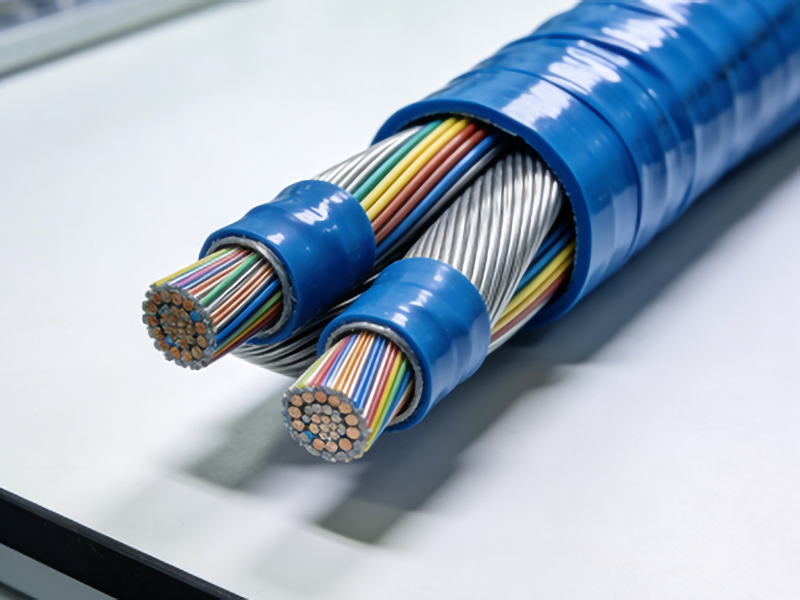
– Armored Fiber Optic Cables: Reinforced with steel or Kevlar to prevent physical damage from external forces.
– Undersea Cables: Designed to withstand extreme pressure, temperature variations, and marine corrosion for submarine communication networks.
4. Signal Modulation Techniques
Efficient signal transmission relies on advanced modulation techniques such as:
– Quadrature Amplitude Modulation (QAM): Enhances data rates by encoding information in both amplitude and phase of the light signal.
– Phase-Shift Keying (PSK): Transmits digital data by changing the phase of the carrier signal, improving reliability over noisy channels.
5. Network Architecture
Military networks often employ a combination of ring and mesh topologies to ensure redundancy and fault tolerance:
– Ring Topology: Offers efficient traffic management with minimal latency but can be vulnerable if a single link fails.
– Mesh Topology: Provides multiple paths between nodes, enhancing resilience against targeted attacks or accidental disruptions.

Applications in Military Defense
Optical fiber technology is integral to various military systems and applications:
1. Command and Control Systems
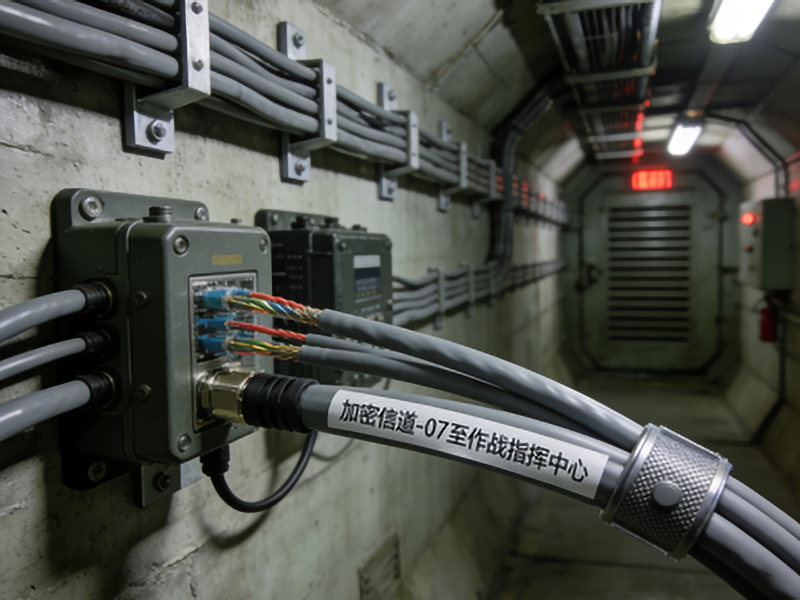
Secure communication networks enable real-time decision-making by connecting command centers with field units, ensuring synchronized operations even in high-stakes scenarios.
2. Surveillance and Intelligence Gathering
Fiber optic cables support the transmission of high-resolution video feeds from surveillance drones, satellites, and ground sensors to central processing hubs, facilitating accurate intelligence analysis.
3. Precision Guidance Systems
Optical fibers are used in missile guidance systems and laser targeting devices to ensure precise communication between the control unit and the weapon system.
4. Undersea Communication Networks
Submarine optical fiber cables connect naval bases, underwater sensor arrays, and submarine communication systems, providing critical connectivity for maritime defense operations.
5. Satellite Communication (SATCOM)
Fiber optic links are employed in SATCOM systems to handle the vast amounts of data transmitted between satellites and ground stations securely.
Challenges in Deploying Military Optical Fiber Systems
Despite its advantages, implementing optical fiber networks in military settings presents several challenges:
1. Deployment Costs
High initial investment required for laying fiber optic cables, especially over long distances or in remote areas.
2. Maintenance and Repair
Fiber optic cables are susceptible to physical damage from natural disasters, accidental cuts, or intentional sabotage. Repairing these cables can be time-consuming and costly, particularly in inaccessible locations.
3. Environmental Harshness
Military operations often occur in extreme environments—extreme temperatures, high humidity, sandstorms, etc.—which can degrade fiber optic cable performance over time.
4. Cybersecurity Threats
While optical fibers are physically secure, the digital signals transmitted through them can still be vulnerable to cyberattacks if not properly encrypted or protected with advanced security protocols.
Future Advancements and Trends
The field of military optical fiber technology is continually evolving to meet new challenges and demands. Emerging trends include:
1. Fiber Optic Sensors
Integration of fiber optic sensors into communication networks allows for real-time monitoring of environmental conditions, structural integrity, and potential threats along the network path.
2. Quantum Communication
Research is ongoing to leverage quantum entanglement properties for ultra-secure data transmission over optical fibers, potentially revolutionizing military communication security.
3. Artificial Intelligence (AI) in Network Management
AI algorithms are being developed to optimize network performance, predict potential failures, and manage traffic more efficiently in fiber optic networks.
Conclusion
Military defense optical fiber is a cornerstone of modern communication infrastructure for armed forces worldwide. Its high bandwidth, resistance to interference, and inherent security make it indispensable for critical operations. While challenges such as deployment costs and cybersecurity risks exist, ongoing advancements in technology promise to enhance its capabilities further. As military strategies continue to evolve, the role of optical fiber in ensuring secure and reliable communication will only grow more significant.