Introduction
Fiber-to-the-Home (FTTH) is a transformative technology that brings high-speed internet directly to homes and businesses. A critical component of this network is the Passive Optical Fiber (POF), which plays a pivotal role in delivering reliable and efficient connectivity. This article delves into the intricacies of FTTH access networks, focusing on how POF technology enhances performance and scalability.
What is FTTH?
FTTH stands for Fiber-to-the-Home, referring to telecommunications infrastructure that delivers fiber optic connections directly to end-users. Unlike traditional copper-based systems, FTTH offers significantly higher bandwidth, lower latency, and improved reliability, making it the backbone of modern high-speed internet services.
Key Components of FTTH Networks
1. Optical Line Terminal (OLT): Located at the service provider’s central office, the OLT manages data transmission between the network and individual users.
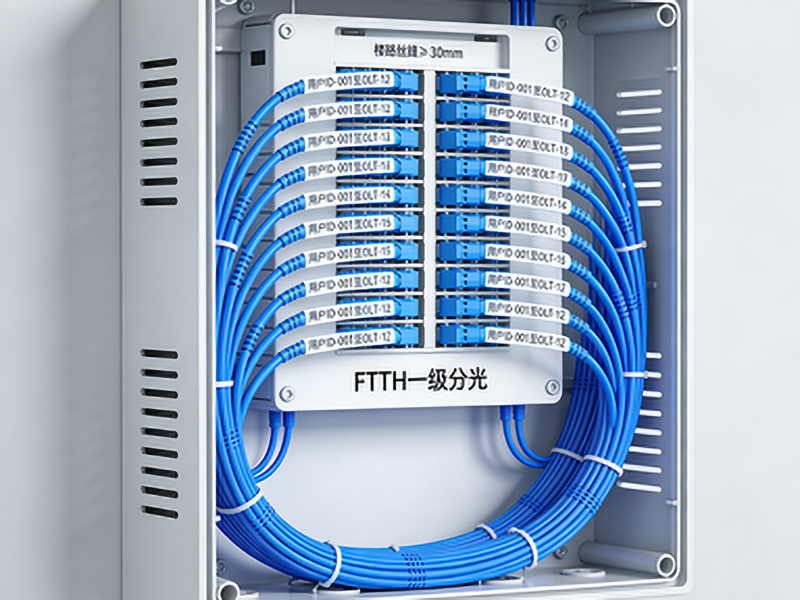
2. Passive Optical Network (PON): A PON consists of optical splitters and fiber optic cables that distribute signals from the OLT to multiple ONUs without any active electronic components.
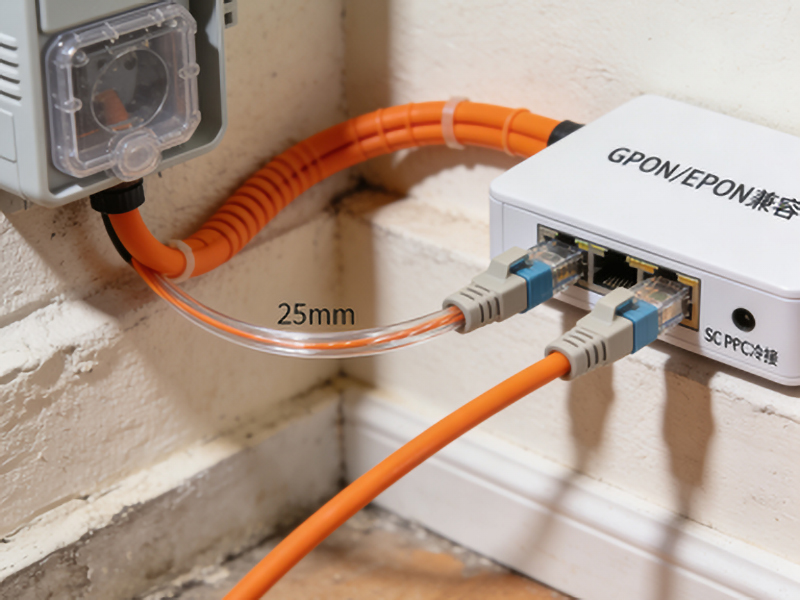
3. Optical Network Unit (ONU)/ONT: These devices are installed at the user’s premises, converting optical signals into electrical ones for use with standard networking equipment.
4. Passive Optical Fiber (POF): The physical medium that carries light-based data between the OLT and ONUs/ONTs without any amplification or regeneration.
Technical Specifications of POF in FTTH Networks
POF is a type of fiber optic cable designed for short-distance communication, typically within a building or campus. Its unique properties make it ideal for FTTH deployments:
– Core Diameter: 9/125 µm (single-mode fiber) or 50/125 µm (multi-mode fiber)
– Wavelengths Supported: Typically operates at 850 nm and 1310 nm, with some supporting 1550 nm for extended reach.
– Attenuation: Approximately 3.5 dB/km at 850 nm and 0.4 dB/km at 1310 nm, ensuring minimal signal loss over long distances.
– Connector Types: SC, LC, FC connectors are commonly used for POF connections in FTTH networks.
Benefits of Using POF in FTTH Networks
High Bandwidth and Speed
POF technology supports multi-gigabit speeds, enabling ultra-fast data transmission ideal for streaming, gaming, and cloud computing.
Low Latency
With minimal signal degradation, POF ensures low latency, crucial for real-time applications like VoIP and online gaming.
Enhanced Reliability
Passive optical networks using POF are less susceptible to electromagnetic interference (EMI) compared to copper cables, providing stable and uninterrupted connectivity.
Cost-Effective Deployment
POF is more cost-effective than traditional single-mode fiber due to its simplicity in installation and maintenance. It reduces the need for active components, lowering overall network costs.
Challenges and Considerations
While POF offers numerous advantages, there are challenges that must be addressed:
– Distance Limitations: POF has a shorter reach compared to single-mode fiber, typically up to 20 km, making it suitable for urban and suburban deployments but less ideal for rural areas.
– Connectorization and Splicing: The installation process requires precise handling of connectors and splicing techniques to avoid signal loss or degradation.
– Compatibility with Existing Infrastructure: Upgrading older copper-based systems to POF may require significant investment in new equipment and training.
Future Trends in FTTH Access Networks
The future of FTTH is poised for growth, driven by increasing demand for high-speed internet and the rollout of 5G networks. Innovations such as:
– Next-Generation PON (NG-PON): Enhancing bandwidth and efficiency with technologies like XGS-PON and NG-PON2.
– Fiber-to-the-X (FTTX) Extensions: Expanding FTTH capabilities to other premises, such as businesses and campuses.
– Smart Network Management: Leveraging AI and machine learning for proactive network monitoring and optimization.
Conclusion
Passive Optical Fiber is a cornerstone of modern FTTH access networks, delivering unparalleled performance and scalability. As technology continues to evolve, POF will remain integral in meeting the growing demands for high-speed connectivity. By understanding its benefits and challenges, telecom providers can optimize their networks to deliver superior service quality to end-users.
References
1. International Telecommunication Union (ITU) – Guidelines on FTTH deployment.
2. Fiber Optic Communications Conference (FOC) – Recent advancements in POF technology.
3. European Telecommunications Standards Institute (ETSI) – Standards for PON and FTTH networks.