
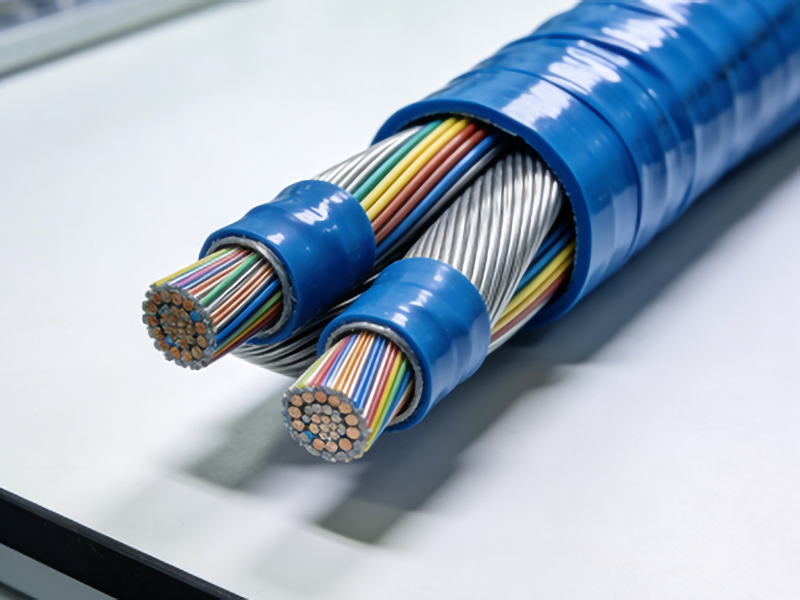
Understanding Low-Attenuation Communication POF
What is Low-Attenuation Communication POF?
Low-Attenuation Communication Plastic Optical Fiber (POF) is a cutting-edge technology designed to minimize signal loss over long distances. Unlike traditional glass optical fibers, POF uses plastic as the core material, offering several advantages such as flexibility and cost-effectiveness.

Technical Parameters of Low-Attenuation POF
1. Core Diameter: Typically ranges from 900 μm to 1 mm, allowing for efficient light transmission.
2. Cladding Diameter: Usually between 1.3 mm and 1.5 mm, providing optimal protection against signal interference.
3. Attenuation Coefficient: As low as 0.4 dB/m at certain wavelengths, significantly lower than standard POFs.
4. Bandwidth: Supports data rates up to 1 Gbps, making it suitable for high-speed communication networks.
5. Operating Wavelength: Primarily operates in the near-infrared region (700-900 nm), ensuring compatibility with common optical transceivers.
Advantages of Low-Attenuation POF
– High Flexibility: Easy to install and bend without signal degradation.
– Cost-Effective: Lower production costs compared to glass fibers, making it an economical choice for various applications.
– Reduced Signal Loss: Minimal attenuation ensures reliable data transmission over extended distances.
– Environmentally Friendly: Composed of recyclable materials, contributing to sustainable practices.
Applications of Low-Attenuation POF
1. Industrial Automation: Used in factory automation and robotics for real-time communication.
2. Telecommunications: Ideal for short-haul and access networks due to its high-speed capabilities.
3. Medical Equipment: Employed in medical imaging devices where low attenuation is crucial for accurate data transmission.
4. Automotive Industry: Integrated into vehicle communication systems for enhanced safety features like collision detection.
5. Smart Homes: Utilized in home automation systems to connect various smart devices efficiently.
Challenges and Limitations
Despite its benefits, Low-Attenuation POF faces challenges such as susceptibility to environmental factors (temperature, humidity) and limited transmission distances compared to glass fibers. Ensuring proper installation and maintenance is crucial for optimal performance.
Future Trends in Low-Attenuation POF
The future of Low-Attenuation Communication POF looks promising with advancements in material science and manufacturing techniques. Researchers are focusing on enhancing the fiber’s durability and increasing its transmission capabilities to cater to evolving technological demands.
Conclusion
Low-Attenuation Communication POF represents a significant advancement in optical fiber technology, offering a balance between performance, cost, and flexibility. Its widespread adoption across various industries underscores its importance in modern communication systems. As technology continues to evolve, Low-Attenuation POF is expected to play an even more pivotal role in shaping the future of data transmission.