Introduction
The automotive industry is constantly evolving, with a strong emphasis on integrating advanced technologies to enhance vehicle performance, safety, and passenger comfort. One such innovation is the Automotive MOST Bus POF (Plastic Optical Fiber) system. This article delves into the intricacies of this technology, its components, advantages, applications, and future prospects.
What is Automotive MOST Bus?
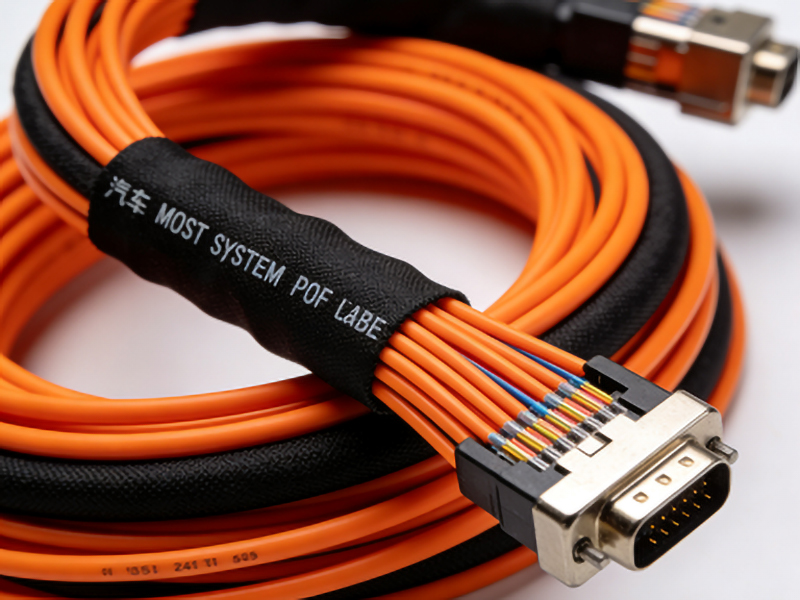
MOST (Media Oriented Systems Transport) is a communication protocol designed for automotive applications. It enables high-speed data transfer within vehicles, supporting multimedia systems, telematics, and other advanced features. The POF (Plastic Optical Fiber) in the MOST Bus system refers to the medium through which data is transmitted—optical fibers made of plastic rather than glass.
Technical Overview
The Automotive MOST Bus POF operates on principles similar to traditional optical fiber communication but uses plastic fibers for cost-effectiveness and ease of installation. Key technical parameters include:
– Data Rate: Up to 1 Gbps, ensuring high-speed data transmission for multimedia applications.
– Bandwidth: Wide bandwidth capable of handling multiple signals simultaneously.
– Latency: Low latency ensures real-time communication, critical for safety systems and infotainment.
– Connectivity: Supports up to 64 nodes on a single network, enabling comprehensive vehicle integration.
Benefits of Automotive MOST Bus POF
1. High Data Transfer Speeds: Enables smooth transmission of high-resolution video, audio, and other data-intensive applications.
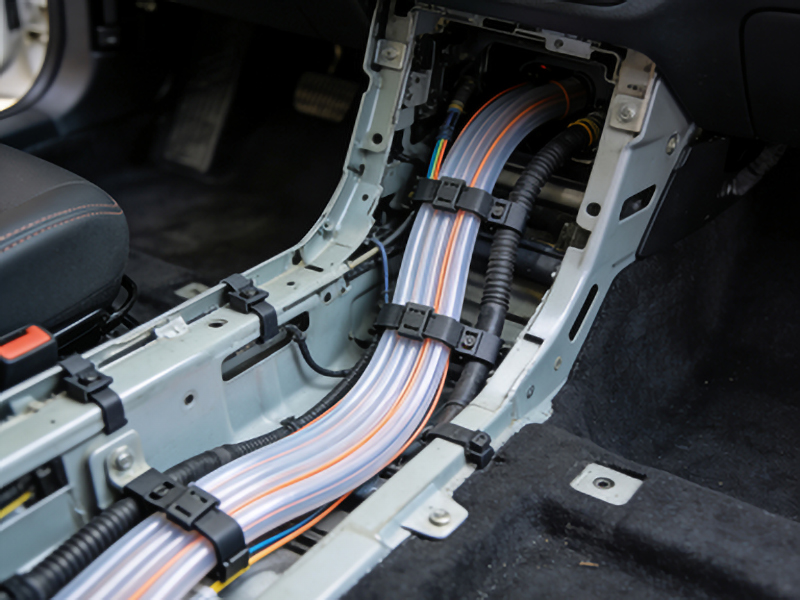
2. Lightweight and Flexible: Plastic optical fibers are lighter and more flexible than traditional copper cables, contributing to reduced vehicle weight and improved fuel efficiency.
3. Immunity to Electromagnetic Interference (EMI): Optical fibers are immune to EMI, ensuring reliable communication in environments with high electromagnetic noise.
4. Long Lifetime: Plastic fibers offer durability, making them suitable for the harsh conditions inside vehicles over extended periods.
5. Cost-Effective: Although initial setup costs may be higher than copper-based systems, long-term savings from reduced maintenance and improved performance justify the investment.
Applications of Automotive MOST Bus POF
The MOST Bus POF system is employed in various automotive applications, including:
– Infotainment Systems: Supporting high-quality audio and video streaming for passengers.
– Telematics: Facilitating communication between vehicles and external networks for navigation, diagnostics, and remote monitoring.
– Advanced Driver Assistance Systems (ADAS): Enabling real-time data transmission critical for features like adaptive cruise control and lane-keeping assist.
– Vehicle Networking: Integrating multiple systems within the vehicle into a unified network for enhanced functionality and efficiency.
Challenges and Limitations
Despite its advantages, the Automotive MOST Bus POF system has some challenges:
1. Installation Complexity: While plastic fibers are easier to install than glass ones, they still require specialized skills and tools.
2. Signal Loss Over Long Distances: Attenuation of optical signals over long distances can affect performance, necessitating additional repeaters or amplifiers.
3. Compatibility Issues: Ensuring seamless integration with existing vehicle systems and protocols can be challenging.
Future Trends and Innovations
The future of Automotive MOST Bus POF looks promising with ongoing advancements in fiber technology and increased adoption across the automotive industry. Potential innovations include:
1. Higher Data Rates: Development of fibers capable of transmitting data at speeds exceeding 2 Gbps to support emerging applications like autonomous driving.
2. Miniaturization: Thinner, more flexible fibers that can be easily integrated into smaller vehicle spaces without compromising performance.
3. Improved Durability: Fibers with enhanced resistance to temperature fluctuations and mechanical stress for longer lifespans in demanding automotive environments.
Conclusion
The Automotive MOST Bus POF system represents a significant leap forward in vehicle communication technologies. By offering high-speed data transmission, immunity to interference, and lightweight design, it addresses many of the limitations of traditional copper-based systems. As the automotive industry continues to embrace connectivity and automation, the adoption of MOST Bus POF is expected to grow, driving innovation and enhancing vehicle performance.