

Introduction
Power over Fiber (POF) has emerged as a transformative technology in the realm of power system communication. This article delves into the intricacies of POF, examining its role, advantages, challenges, and future prospects.
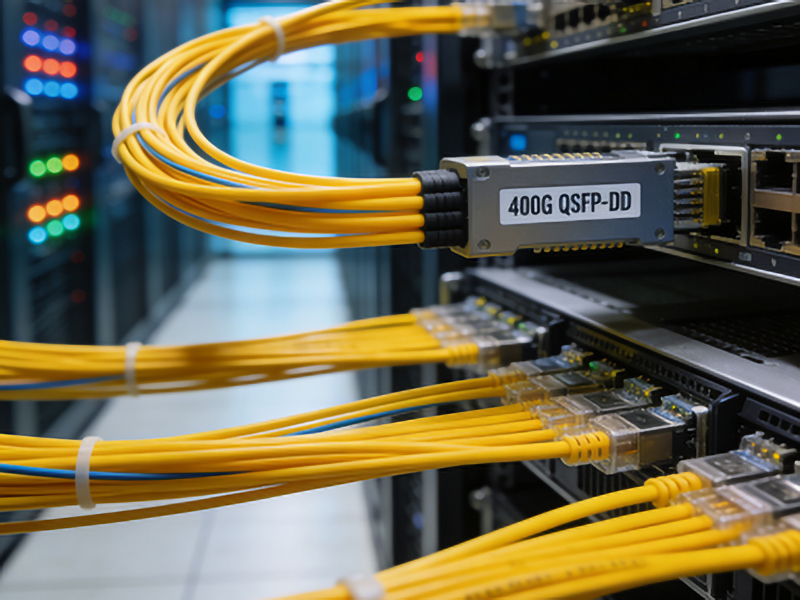
What is Power Over Fiber?
Power Over Fiber (POF) integrates data transmission with power delivery over optical fibers. Unlike traditional methods that use copper wires, POF leverages light to both send signals and provide electrical power. This dual functionality makes it highly efficient for applications requiring simultaneous communication and energy supply.
Technical Parameters of POF
– Bandwidth: Supports high-speed data transmission with bandwidth up to 10 Gbps.
– Power Delivery: Capable of delivering several watts of power over distances exceeding 1 kilometer.
– Latency: Low latency, ensuring real-time communication critical for teleprotection systems.
Applications in Power Systems
Teleprotection
POF is pivotal in teleprotection, enabling the rapid transmission of protection commands and status updates across power grids. Its low latency ensures timely fault detection and isolation, enhancing grid reliability.
Grid Management
By providing both data and power, POF simplifies grid management systems. It supports distributed energy resources integration and smart grid technologies, optimizing energy distribution efficiently.
Advantages of POF
– High Immunity to Interference: Optical fibers are immune to electromagnetic interference (EMI), making POF ideal for environments with high EMI.
– Long-distance Capability: Unlike copper wires, POF can transmit data and power over long distances without significant signal degradation.
– Lightweight and Flexible: Optical fibers are lighter and more flexible than traditional copper cables, reducing installation complexity.
Challenges and Considerations
Cost Implications
The initial setup costs for POF systems can be high due to the specialized equipment required. However, long-term savings from reduced maintenance and energy efficiency may offset these costs.
Complexity of Installation
While lightweight, installing optical fibers requires skilled personnel and precise techniques to ensure optimal performance.
Future Trends
– Integration with IoT: POF is expected to play a significant role in the Internet of Things (IoT) within power systems, enabling smart devices to communicate and receive power seamlessly.
– Advanced Protection Systems: As grids become more complex, POF’s ability to support high-speed data transmission will be crucial for advanced teleprotection systems.
Conclusion
Power Over Fiber is revolutionizing power system communication by offering a reliable, efficient, and scalable solution. Its adoption is expected to grow as the demand for smarter, more resilient grids increases. Understanding its capabilities and applications is essential for engineers and policymakers looking to enhance grid infrastructure.