
Understanding Side-Glow Plastic Optical Fiber: Applications and Technical Insights
What is Side-Glow Plastic Optical Fiber?
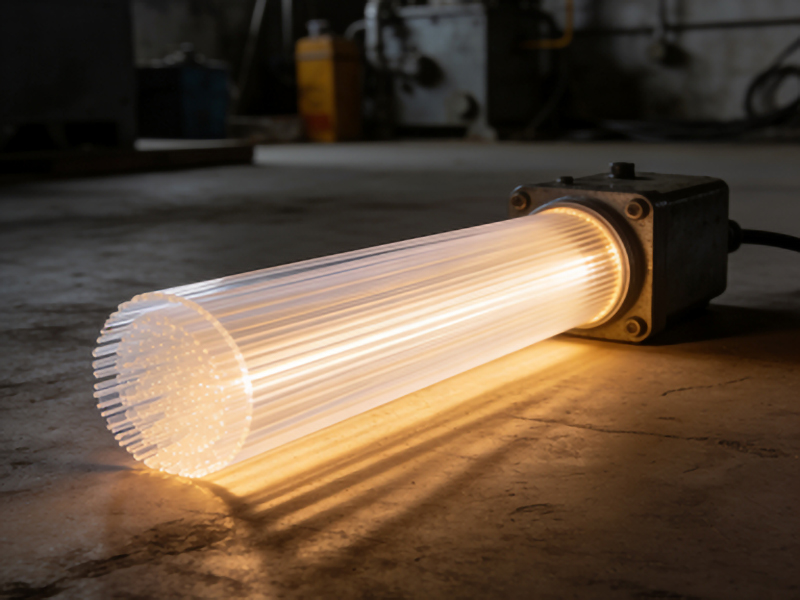
Side-glow plastic optical fiber (POF) is a type of optical fiber designed to emit light along its length, rather than just at the ends. This makes it ideal for applications where distributed lighting is required, such as in decorative lighting, automotive interiors, and architectural highlights.
Technical Parameters
1. Core Diameter: Typically ranges from 0.5mm to 2mm, determining the fiber’s light-carrying capacity.
2. Cladding Thickness: Usually between 80μm and 125μm, which affects the fiber’s flexibility and durability.
3. Numerical Aperture (NA): Generally higher in POF compared to glass fibers, allowing for easier coupling of light sources.
4. Attenuation: Lower attenuation compared to traditional plastic fibers due to optimized materials, ensuring better light transmission over longer distances.
5. Flexibility: High flexibility with a bend radius as low as 10mm, making it suitable for complex installations.
Applications of Side-Glow Plastic Optical Fiber
– Decorative Lighting: Used in Christmas lights, window decorations, and ornamental displays.
– Automotive Lighting: Applied in interior lighting, such as door handles, consoles, and seatbelt reminders.
– Architectural Lighting: Incorporated into building facades, staircases, and ceilings for aesthetic effects.
– Aviation and Marine Industries: Utilized in cabins and cockpits for ambient lighting solutions.
Advantages of Side-Glow POF
– Cost-Effective: Lower production costs compared to glass fibers.
– Easy Installation: Flexible and lightweight, simplifying the installation process.
– Customizable: Available in various colors and lengths to meet specific design requirements.
– Energy Efficiency: Low power consumption while providing bright illumination.
Challenges and Considerations
– Light Decay: Over long distances, light intensity may diminish, requiring additional light sources or amplifiers.
– Durability: POFs are more susceptible to environmental factors like UV exposure and temperature fluctuations compared to glass fibers.
– Connectorization: Proper termination and connectors are essential to maintain optical performance and prevent signal loss.
Conclusion
Side-glow plastic optical fiber offers a versatile and innovative solution for distributed lighting applications. With its unique properties, such as high flexibility and customizable options, it continues to find new uses across various industries. Understanding the technical parameters and application considerations is crucial for maximizing its potential in different settings.