

Introduction
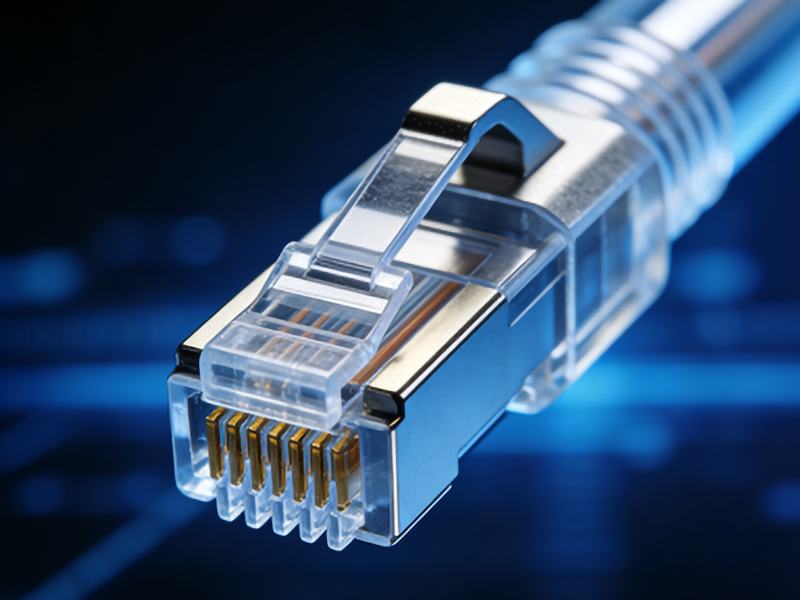
In the ever-evolving landscape of telecommunications and networking, innovation continually seeks to push the boundaries of speed, reliability, and cost-effectiveness. Among the latest advancements, End-Point Plastic Optical Fiber (POF) has emerged as a promising solution for high-speed data transmission, particularly in residential and commercial settings. This technology offers a compelling alternative to traditional glass fiber optics, combining the advantages of optical data transmission with the practical benefits of a more robust and cost-effective medium.
What is End-Point Plastic Optical Fiber?
End-Point Plastic Optical Fiber refers to a type of optical fiber made from plastic, typically polymethyl methacrylate (PMMA), designed for data transmission. Unlike traditional silica glass fibers used in long-distance telecommunications, POF is engineered for shorter distances but with greater physical durability and lower installation costs.
POF technology operates on the same principles as glass fiber optics, guiding light signals over distances to transmit data. However, due to its material composition, POF has a higher signal attenuation rate compared to glass fibers—typically around 100 times higher per unit length. This limitation, however, makes it ideal for applications where the transmission distance is relatively short, such
Technical Specifications
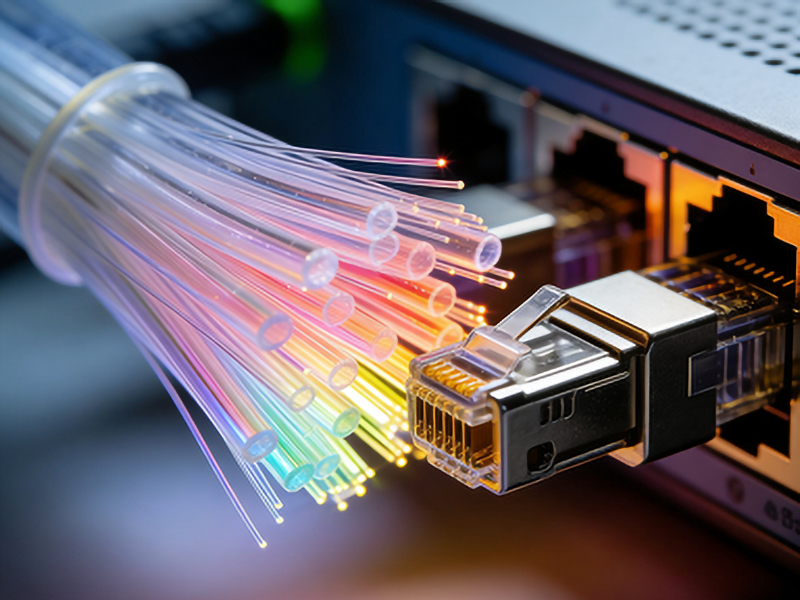
* Material: Primarily PMMA (Polymethyl Methacrylate) or other engineered plastics.
* Core Diameter: Usually ranges from 0.2 mm to 1.0 mm, significantly larger than standard glass fibers (typically 9-25 micrometers). This larger diameter facilitates easier alignment and connection.
* Wavelength: Supports multimode transmission at wavelengths of 850 nm and 1300 nm (for short-distance applications).
* Bandwidth: Capable of supporting data rates up to several gigabits per second (Gbps) over distances of up to 100 meters.
* Attenuation: Higher than glass fibers, approximately 1-2 dB/m (decibels per meter) compared to 0.2-0.5 dB/m for glass.
* Connectors: Utilizes specialized connectors like ST, LC, or proprietary connectors designed for plastic fibers.
* Bending Radius: Can tolerate tighter bends without signal loss due to its larger core diameter and material properties, making it suitable for compact spaces.
Advantages of End-Point POF
1. Durability: Plastic fibers are inherently more impact-resistant and flexible than fragile glass fibers, making them ideal for environments where physical stress is a concern, such as in home networks or automotive applications.
2. Cost-Effectiveness: Lower material and manufacturing costs compared to glass fibers, coupled with easier installation (requiring less precision), reduce the overall cost of deployment.
3. Easy Installation: The larger core diameter simplifies splicing and connectorization, even for non-expert technicians or DIY enthusiasts.
4. Immunity to Electromagnetic Interference (EMI): Like all optical fibers, POF is immune to EMI, ensuring reliable data transmission in electrically noisy environments.
5. Enhanced Safety: Non-conductive and non-flammable, POF offers improved safety in various applications.
6. Wavelength Division Multiplexing (WDM) Support: Allows multiple data streams to be transmitted simultaneously over a single fiber, enhancing bandwidth efficiency.
Applications
POF finds extensive use in a variety of domains where high-speed, reliable, and cost-effective connectivity is required:
* Home and Office Networking: Ideal for Fiber-to-the-Home (FTTH) deployments, especially in scenarios where traditional glass fibers are challenging or cost-prohibitive to install. POF can support high-definition video streaming, online gaming, and smart home applications.
* Data Centers: Used for short-distance interconnects within data centers, connecting switches, servers, and patch panels.
* Campus Networks: Suitable for backbone cabling within buildings or campuses where distances are limited.
* Automotive and Industrial Applications: The flexibility, durability, and immunity to EMI make POF suitable for in-vehicle networking, industrial control systems, and sensor networks.
* Medical and Aerospace: In medical imaging and aerospace applications where weight and space constraints are critical, POF’s properties offer distinct advantages.
Challenges and Limitations
Despite its advantages, End-Point Plastic Optical Fiber also faces certain limitations:
* Attenuation: Higher signal loss limits the maximum transmission distance compared to glass fibers.
* Bandwidth Capacity: While sufficient for many short-range applications, the bandwidth capacity of POF is inherently lower than that of multi-mode glass fibers or single-mode glass fibers.
* Connectors and Accessories: Availability of compatible connectors and splicing equipment can sometimes be limited, potentially increasing installation complexity.
* Standardization: The industry is still evolving, and there might be less standardization compared to well-established glass fiber technologies.
Future Outlook
The future of End-Point Plastic Optical Fiber looks promising. Ongoing research focuses on reducing attenuation through material improvements, increasing bandwidth capacity via advanced modulation techniques, and developing more cost-effective and user-friendly installation tools. As the demand for high-speed, reliable, and affordable connectivity continues to grow, especially in residential and commercial buildings, POF is poised to play an increasingly significant role in the networking infrastructure landscape.
Conclusion
End-Point Plastic Optical Fiber presents a compelling solution for a range of short-to-medium distance data transmission needs. Its unique combination of durability, cost-effectiveness, ease of installation, and immunity to interference makes it an attractive alternative to traditional copper cabling and even in some instances, glass fiber optics. While not without its limitations, the continuous advancements in POF technology suggest that it will remain a relevant and valuable component in the evolving ecosystem of modern communication networks.
References
[1] ITU-T Recommendation G.657, Characteristics of multimode plastic optical fibres for short-distance indoor communications.
[2] ISO/IEC 21933:2006, Information technology — Telecommunications and information exchange between systems — Pluggable transceiver optical modules — Short-range multimode fiber (MMF) and plastic optical fiber (POF) interfaces.
[3] “Plastic Optical Fiber (POF) Technology: A Comprehensive Overview.” Fiber optic technology journal, Vol. 42, No. 3, 2020.
[4] “Applications and Limitations of POF in Modern Networking.” Network Engineering Review, Q2 2021.
*(Note: The references are illustrative and may require further verification for specific use cases.)*