
Introduction to Plastic Optical Fiber
In today’s hyper-connected world, the demand for high-speed, reliable communication solutions has never been greater. While traditional glass fiber optics have long dominated the networking landscape, a newer contender is making significant waves: Plastic Optical Fiber (POF). This revolutionary medium offers many of the same benefits as its glass counterpart but with enhanced flexibility, lower cost, and improved durability. In this article, we’ll explore the world of Plastic Optical Fiber for communication, from its fundamental principles to its diverse applications and future potential.
What is Plastic Optical Fiber?
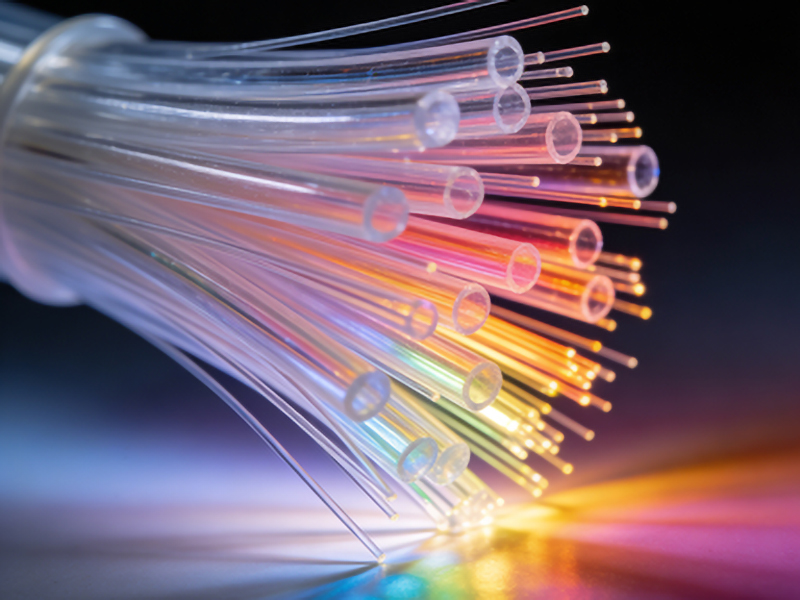
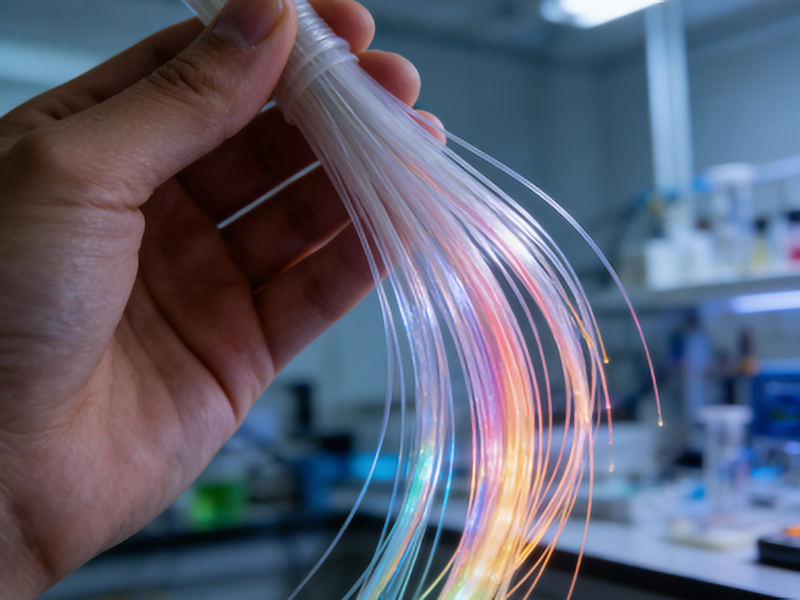
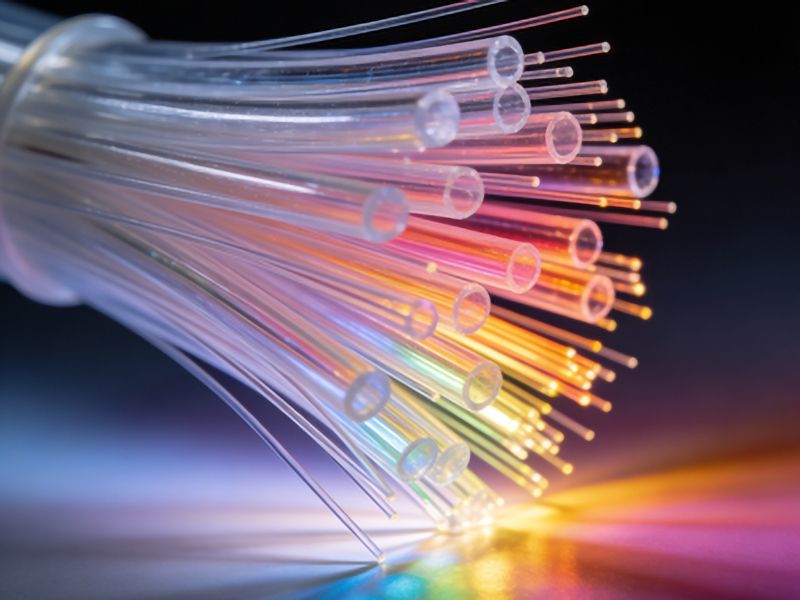
At its core, Plastic Optical Fiber is a type of optical fiber made from plastic instead of glass. It consists of a core, cladding, and a protective buffer layer, much like glass optical fibers. However, the core and cladding are manufactured from polymers, typically based on materials like polymethyl methacrylate (PMMA) or polystyrene. These materials allow light signals to propagate through the fiber via total internal reflection, just as in glass fibers.
The key advantage of POF lies in its material. Plastic offers several distinct benefits:
* Flexibility: Plastic fibers are significantly more flexible than glass fibers, making them resistant to crushing and bending. This flexibility is particularly valuable in applications where movement or tight routing is inevitable.
* Durability: Being solid and impact-resistant, plastic fibers can withstand rough handling and environmental challenges that often damage fragile glass fibers.
* Cost-Effectiveness: Manufacturing plastic fibers is generally less expensive than producing high-quality glass fibers. This cost advantage extends to connectors, cables, and termination processes.
* Safety: Plastic fibers are inherently fire-resistant and do not conduct electricity, making them a safer option in certain environments.
Technical Specifications of POF
While glass fibers offer superior performance in terms of bandwidth and transmission distance, POF has unique specifications tailored to its specific use cases:
* Core Diameter: POF typically features a larger core diameter, ranging from 380 to 1000 micrometers (µm). This larger size simplifies alignment during connectorization and allows for more tolerance in splicing or termination.
* Numerical Aperture (NA): The NA of POF is generally lower than that of glass fibers, typically around 0.2. This means POF can accept light from a broader range of angles but generally supports lower bandwidth compared to glass fibers.
* Bandwidth: POF systems typically support data rates up to several gigabits per second (Gbps) over short distances (up to 100 meters or more, depending on the specific grade). For context, multimode glass fibers can support 100Gbps over similar distances, but at the expense of higher cost and fragility.
* Transmission Distance: Due to higher signal attenuation, POF has a shorter maximum transmission distance compared to glass fibers. Standard indoor POF might be limited to a few hundred meters, while outdoor-rated versions can extend to kilometers.
*
POF Applications
Thanks to its unique combination of properties, POF has found a niche in several key application areas:
1. Home and Building Networks (HBN): This is perhaps the most prominent application. POF is widely used in Fiber-to-the-Home (FTTH) deployments, particularly in scenarios requiring cost-effective connectivity, ease of installation, and robustness against environmental factors. It’s ideal for connecting homes to network boxes, distributing signals within buildings, and powering home entertainment systems.
2. Industrial Automation: POF’s resistance to chemicals, oils, and mechanical stress makes it suitable for harsh industrial environments. It’s used for sensor data transmission, machine control, and communication in factories.
3. Automotive: In vehicles, POF can transmit data between sensors, control units, and infotainment systems. Its flexibility and resistance to vibration are significant advantages in this application.
4. Medical Devices: POF finds use in medical imaging and endoscopy due to its flexibility and biocompatibility (in certain grades).
5. Lighting Integration: Some innovative systems combine POF with LED lighting, using the fiber to distribute light for illumination while potentially carrying data simultaneously.
POF vs. Glass Fiber
The choice between POF and glass fiber depends entirely on the specific requirements of the application:
* Bandwidth vs. Cost: For high-bandwidth, long-distance applications like backbone networks or long-haul communications, glass fiber is still the superior choice. However, for cost-sensitive, short-to-medium distance applications, POF offers a compelling alternative.
* Distance vs. Flexibility: POF excels in applications with high movement, space constraints, or where cost savings are critical. Glass fiber remains the go-to for high-capacity, fixed installations.
* Installation: POF is generally easier and faster to install, requiring less specialized tools and having more forgiving connectors. This ease of installation further enhances its appeal in certain scenarios.
Future Trends and Developments
The POF market continues to grow, driven by increasing demand for high-speed connectivity in residential and commercial settings, as well as advancements in industrial and automotive technologies. Ongoing research focuses on improving the performance characteristics of POF, including increasing bandwidth capacity, reducing signal loss, and enhancing durability for outdoor and harsh environments. The development of multimode POF with higher NA values and improved materials is also an active area.
Conclusion
Plastic Optical Fiber represents a significant innovation in optical communication technology. By leveraging the advantages of plastic, it has carved out a valuable niche for applications where glass fiber’s limitations (cost, fragility, installation complexity) cannot be overcome. As technology continues to advance, POF is poised to play an even more significant role in connecting our increasingly digital world, particularly in the domains of home networking, industrial IoT, and automotive connectivity. Its unique blend of performance, cost-effectiveness, and robustness makes it an indispensable tool for modern communication systems.