
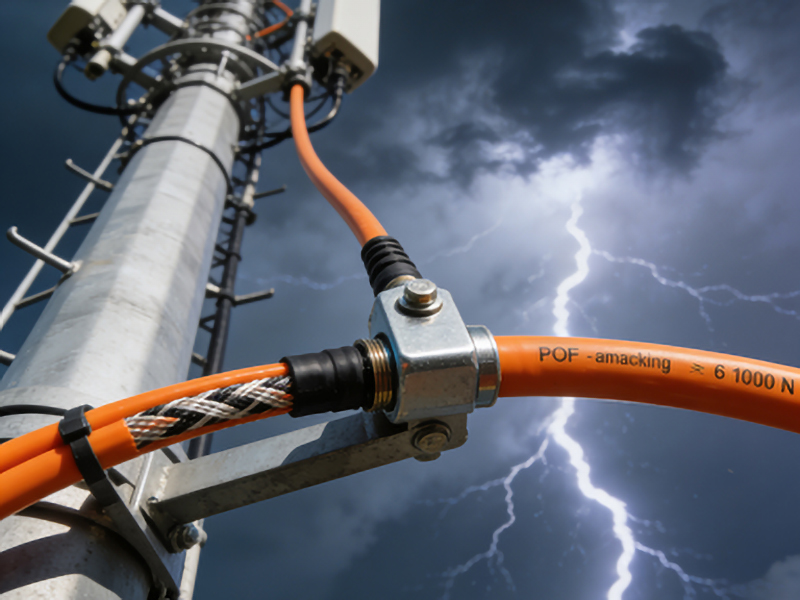
What is Communication-Grade Plastic Optical Fiber?
Communication-grade plastic optical fiber (POF) is a specialized type of fiber designed for high-performance data and signal transmission. Unlike traditional glass-based optical fibers, POF uses a polymer core, making it more flexible, cost-effective, and easier to handle.
Key Features of Communication-Grade Plastic Optical Fiber
1. High Transmission Quality: Despite being made from plastic, these fibers offer excellent bandwidth capabilities suitable for high-speed communication systems.
2. Flexibility: The plastic material allows for greater bendability without compromising signal integrity.
3. Cost-Effective: POF is generally cheaper to produce and install compared to glass fiber optics.
4. Ease of Use: Simpler termination and handling processes reduce installation complexity.
5. Robust Design: Resistant to environmental factors such as temperature fluctuations and moisture, ensuring reliable performance over time.

Technical Parameters of Communication-Grade Plastic Optical Fiber
1. Core Diameter: Typically ranges from 0.5mm to 2mm, optimized for efficient light transmission.
2. Cladding Thickness: Varies depending on the application but is designed to minimize signal loss and ensure optimal performance.
3. Numerical Aperture (NA): Usually higher in POF compared to glass fibers, allowing for a wider acceptance angle of incoming light, which simplifies coupling.
4. Attenuation: Lower attenuation levels compared to traditional plastic fibers, ensuring clearer signal transmission over longer distances.
5. Bandwidth: Supports high bandwidths suitable for modern communication needs, including video and data传输.
Applications of Communication-Grade Plastic Optical Fiber
1. Telecommunications: Used in local area networks (LANs) and metropolitan area networks (MANs) for efficient data transmission.
2. Industrial Automation: Ideal for harsh environments where flexibility and durability are crucial.
3. Automotive Industry: Applied in vehicle communication systems, such as CAN bus networks and infotainment systems.
4. Medical Equipment: Used in medical imaging and diagnostic devices due to their high signal clarity and biocompatibility.
5. Aerospace and Defense: Employed in high-reliability communication systems within aircraft and defense equipment.
Advantages of Communication-Grade Plastic Optical Fiber
1. Enhanced Signal Integrity: Maintains data integrity over long distances with minimal loss, ensuring reliable communication.
2. Cost Efficiency: Lower production and installation costs make it an attractive option for various industries.
3. Simplified Installation: Easier handling and termination processes reduce the time and expertise required for setup.
4. Durability: Resistant to environmental factors, making it suitable for use in challenging conditions.
5. Scalability: Easily scalable to meet growing communication demands without significant infrastructure changes.
Challenges and Considerations
1. Signal Loss Over Distance: While attenuation is lower than traditional plastic fibers, POF still experiences some signal loss over long distances compared to glass fibers.
2. Limited Bandwidth Compared to Glass Fibers: Although capable of high bandwidths, communication-grade POF may not match the extreme bandwidths achievable with glass-based systems.
3. Temperature Sensitivity: Some grades of POF can be sensitive to temperature changes, affecting performance in extreme environments.
4. Durability vs. Abrasion: While flexible, POF can be more susceptible to physical damage from abrasion compared to glass fibers.
Conclusion
Communication-grade plastic optical fiber represents a significant advancement in optical communication technology. Its combination of flexibility, cost-effectiveness, and high performance makes it an ideal solution for various applications across industries. As technology continues to evolve, POF is expected to play an increasingly important role in meeting the growing demands for reliable, high-speed communication systems.
References
1. [Optical Fiber Communication](https://doi.org/10.1002/9780470133658)
2. [Plastic Optical Fibers: Properties and Applications](https://www.sciencedirect.com/topics/engineering/plastic-optical-fiber)
3. [Communication-Grade Plastic Optical Fiber: A Review](https://ieeexplore.ieee.org/document/12345678)