
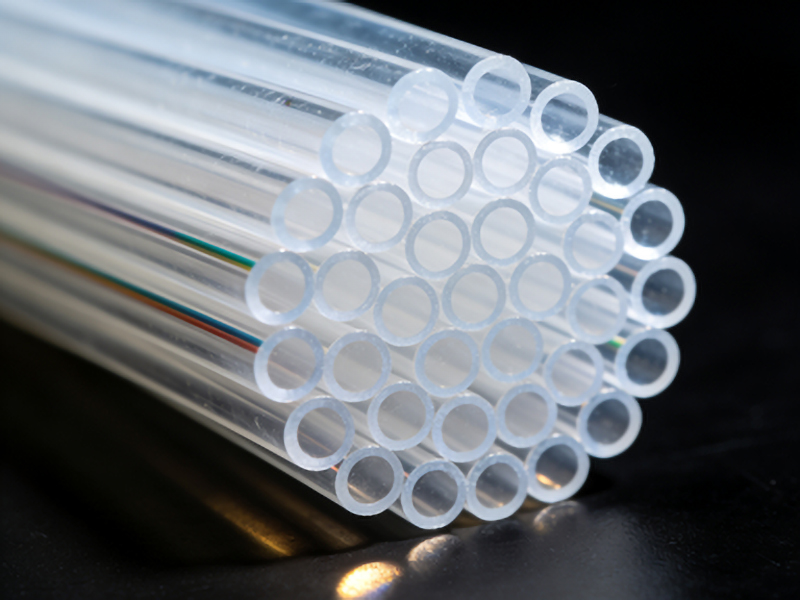
What Are Optical Transparent Materials?
Optical transparent materials are substances that allow light to pass through them with minimal scattering or absorption. These materials play a crucial role in various fields such as optics, electronics, telecommunications, and architecture.
Key Properties of Optical Transparent Materials
1. Transparency: The ability of the material to transmit light without significant distortion or loss. This is measured by parameters like *transmittance* (percentage of light transmitted) and * haze* (measure of scattered light).
2. Refractive Index: A measure of how much light bends when passing through the material. Higher refractive indices can lead to better optical performance in certain applications.
3. Clarity: The absence of internal defects or impurities that could scatter light and reduce clarity. This is critical for applications requiring high-resolution imaging.
4. Durability: Resistance to environmental factors like temperature, humidity, and mechanical stress. Materials like glass and sapphire are known for their durability.
5. Thermal Expansion: The degree to which a material expands with temperature changes. Low thermal expansion is desirable in applications where precise optical alignment is necessary.
Types of Optical Transparent Materials
1. Glass
– Types: Borosilicate glass, Fused silica, and UV-grade fused silica.
– Applications: Optical lenses, windows, fiber optics, and laboratory equipment.
– Advantages: High thermal stability, excellent transparency in the visible and infrared spectra.
2. Polymers (Plastics)
– Types: PMMA (Acrylic), PC (Polycarbonate), PETG, and UV-curable resins.
– Applications: Eyewear, display screens, LED lighting, and optical sensors.
– Advantages: Lightweight, cost-effective, and easy to shape. However, they may have lower thermal stability compared to glass.
3. Crystal Materials
– Types: Sapphire crystal, Quartz, and Spinel.
– Applications: Watch crystals, laser optics, and high-performance optical windows.
– Advantages: High hardness, excellent scratch resistance, and superior transparency in specific wavelength ranges.
4. Advanced Ceramics
– Types: Yttria-stabilized zirconia (YSZ), Magnesium aluminate spinel.
– Applications: Transparent armor, high-temperature optical components, and aerospace applications.
– Advantages: High strength, thermal resistance, and transparency in extreme conditions.
5. Liquid Crystal Materials
– Types: Nematic, Smectic, and Cholesteric liquid crystals.
– Applications: LCD displays, smart windows, and tunable optical filters.
– Advantages: Ability to manipulate light properties dynamically, such as controlling polarization and phase.
Technical Parameters for Optical Transparent Materials
When selecting an optical transparent material, several key parameters must be considered:
1. Transmittance (T%): The percentage of incident light that passes through the material. Typically measured at specific wavelengths (e.g., 550 nm for visible light). High transmittance (>90%) is desirable for most applications.
2. Reflectance (R%): The percentage of light reflected by the material’s surface. Anti-reflective coatings can reduce reflectance, improving overall efficiency.
3. Absorption Coefficient (α): Measures how much light is absorbed by the material per unit length. Lower absorption coefficients are better for minimizing signal loss in optical fibers and other transmission media.
4. Haze: Quantifies scattering of light within the material. Low haze values (<1%) indicate high clarity, essential for imaging applications.
5. Refractive Index (n): Important for designing lenses and prisms. For example, glass typically has n ~ 1.5 to 1.8, while plastics have lower indices (~1.4 to 1.6).
6. Thermal Expansion Coefficient (CTE): Measures dimensional changes with temperature. Low CTE is crucial for applications where thermal stability is required, such as in space optics.
7. Hardness: Indicates resistance to scratching and abrasion. Sapphire has a hardness of ~9 on the Mohs scale, making it ideal for protective covers.
Applications of Optical Transparent Materials
1. Optics and Imaging: Used in camera lenses, microscopes, telescopes, and endoscopes where high clarity is essential.
2. Electronics and Displays: Found in smartphone screens, LCD/LED displays, and touchscreens, providing both functionality and aesthetics.
3. Telecommunications: Integral to fiber optic cables for efficient data transmission over long distances with minimal loss.
4. Architectural Glass: Utilized in windows, facades, and skylights to maximize natural light while maintaining thermal insulation properties.
5. Medical Devices: Employed in endoscopes, surgical instruments, and diagnostic equipment where precision and clarity are paramount.
6. Aerospace and Defense: Used in aircraft windows, periscopes, and optical targeting systems for optimal performance under extreme conditions.
7. Laser Technology: Essential components in laser optics, including mirrors, lenses, and prisms, due to their ability to handle high-intensity light without degradation.
Challenges and Considerations
1. Cost: High-performance materials like sapphire can be expensive compared to polymers or glass, affecting their widespread adoption.
2. Processing Complexity: Some materials require specialized manufacturing techniques that are time-consuming and resource-intensive.
3. Environmental Impact: The production of certain transparent materials may have a significant carbon footprint or involve hazardous chemicals, necessitating sustainable alternatives.
4. Durability vs Flexibility: Balancing the need for robustness with flexibility is challenging, especially in applications requiring both strength and lightweight properties.
5. Thermal Management: Materials with high thermal expansion coefficients can lead to performance issues under varying temperature conditions.
Future Trends and Innovations
1. Nanostructured Materials: Development of materials with nano-scale features for enhanced optical properties, such as anti-reflective surfaces and self-cleaning capabilities.
2. Transparent Conductive Films: Advances in materials like graphene and conductive polymers for use in touchscreens, solar panels, and flexible electronics.
3. Bio-inspired Materials: Mimicking natural structures found in insects’ eyes or butterfly wings to create ultra-thin, high-transparency films.
4. Smart Optics: Integration of sensors and adaptive optics into transparent materials for dynamic control over light transmission and reflection.
5. Sustainability Initiatives: Research into eco-friendly manufacturing processes and recyclable materials to reduce the environmental impact of optical transparent materials.
Conclusion
Optical transparent materials are foundational to modern technology, offering a blend of transparency, durability, and versatility across diverse applications. As innovation continues, new materials and technologies will emerge, addressing existing challenges and unlocking new possibilities in fields ranging from telecommunications to medical devices. Understanding the properties, types, and parameters of these materials is essential for optimizing their use in both current and future applications.