I. How to Choose Solar-Powered Lanterns: 5 Core Buying Criteria
Selecting the perfect solar-powered lantern isn’t just about looks—it’s about matching performance to your needs. Focus on these five critical factors to avoid common pitfalls and get the best value:
1. Solar Panel Quality: The Foundation of Charging Efficiency
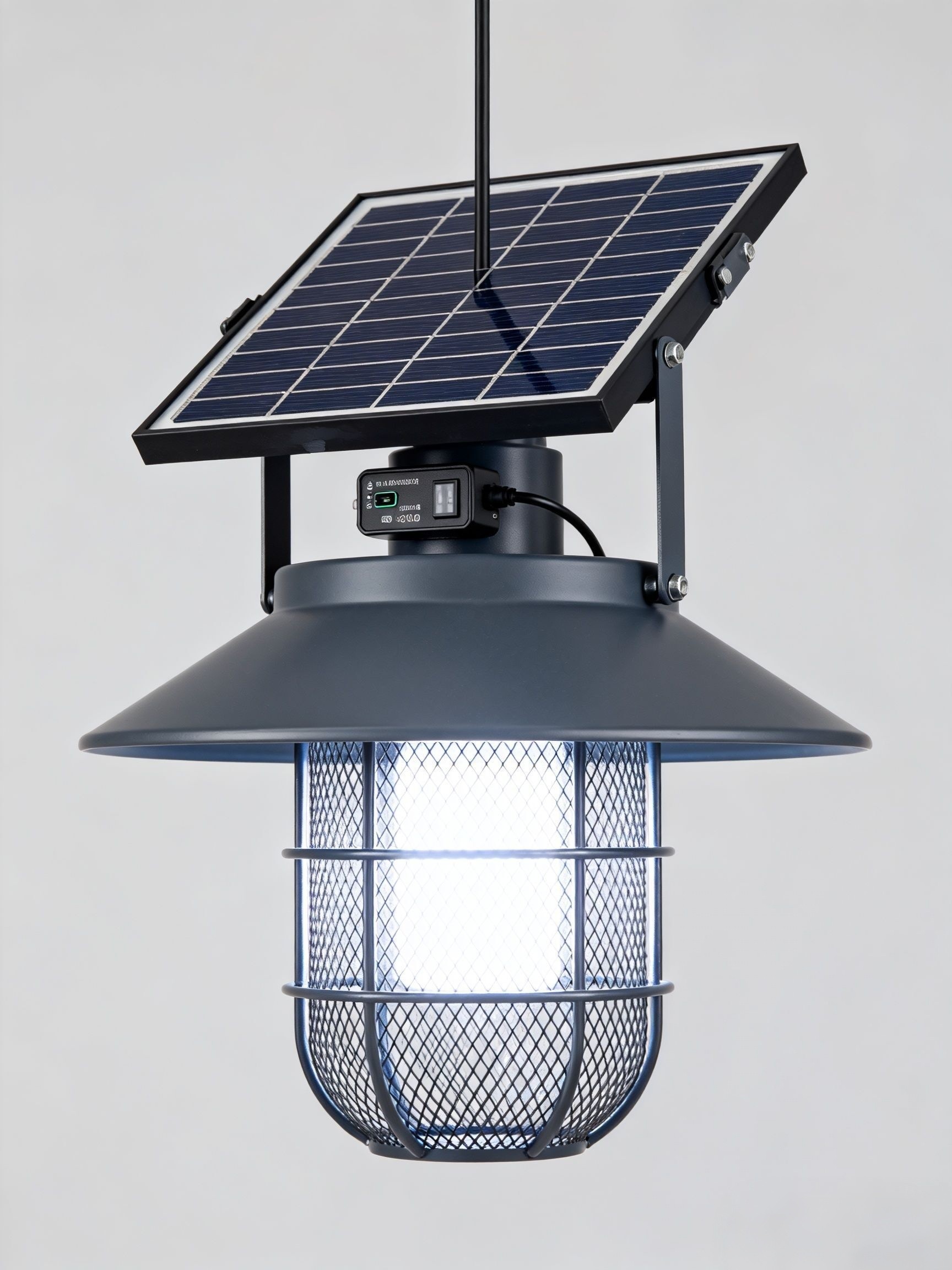
The solar panel is the “engine” of your lantern, directly determining how quickly it charges and how well it performs in low-light conditions. Two main types dominate the market: monocrystalline silicon panels and polycrystalline silicon panels. Monocrystalline panels boast 15-22% efficiency, charging faster even on cloudy days, making them ideal for areas with inconsistent sunlight. Polycrystalline panels (12-18% efficiency) are more budget-friendly and work well in regions with abundant direct sunlight.
Purchasing Tip: Look for lanterns with detachable or adjustable panels—they allow you to position the panel for maximum sun exposure while placing the lantern in a shaded decorative spot.
2. Battery Capacity & Type: Ensure Long-Lasting Glow
A high-quality solar panel means nothing without a reliable battery to store energy. Most premium solar lanterns use lithium-ion batteries (3.7V) due to their high energy density, long cycle life (500+ charges), and lightweight design. Avoid older nickel-cadmium (NiCd) batteries, which suffer from “memory effect” and lose capacity over time.
Battery capacity (measured in mAh) directly impacts runtime: 600-1200mAh batteries power small decorative lanterns for 8-12 hours, while 2000mAh+ options keep large camping lanterns lit for 15-20 hours. Many models also include a USB port for manual charging—perfect for rainy spells or indoor use.
3. Waterproof & Weather Resistance: For Outdoor Durability
Outdoor use demands robust weather resistance. Check the IP (Ingress Protection) rating before buying: IP44 is sufficient for covered areas like porches (resists splashes and dust), while IP65 or higher is a must for exposed spaces (yards, campsites) as it withstands heavy rain and direct water jets. Note that some cheap models only waterproof the lantern body—ensure the solar panel and battery compartment are also sealed.
4. Brightness & Light Modes: Match to Your Scenario
Brightness (measured in lumens) varies widely: 50-100 lumens create soft ambient light for dinners or bedrooms, while 200-500 lumens are ideal for camping or pathway lighting. Look for lanterns with multiple light modes—warm white (for ambiance), cool white (for task lighting), and flashing (for emergencies or parties). Some advanced models even offer dimming controls to adjust intensity.
5. Design & Material: Blend Aesthetics with Durability
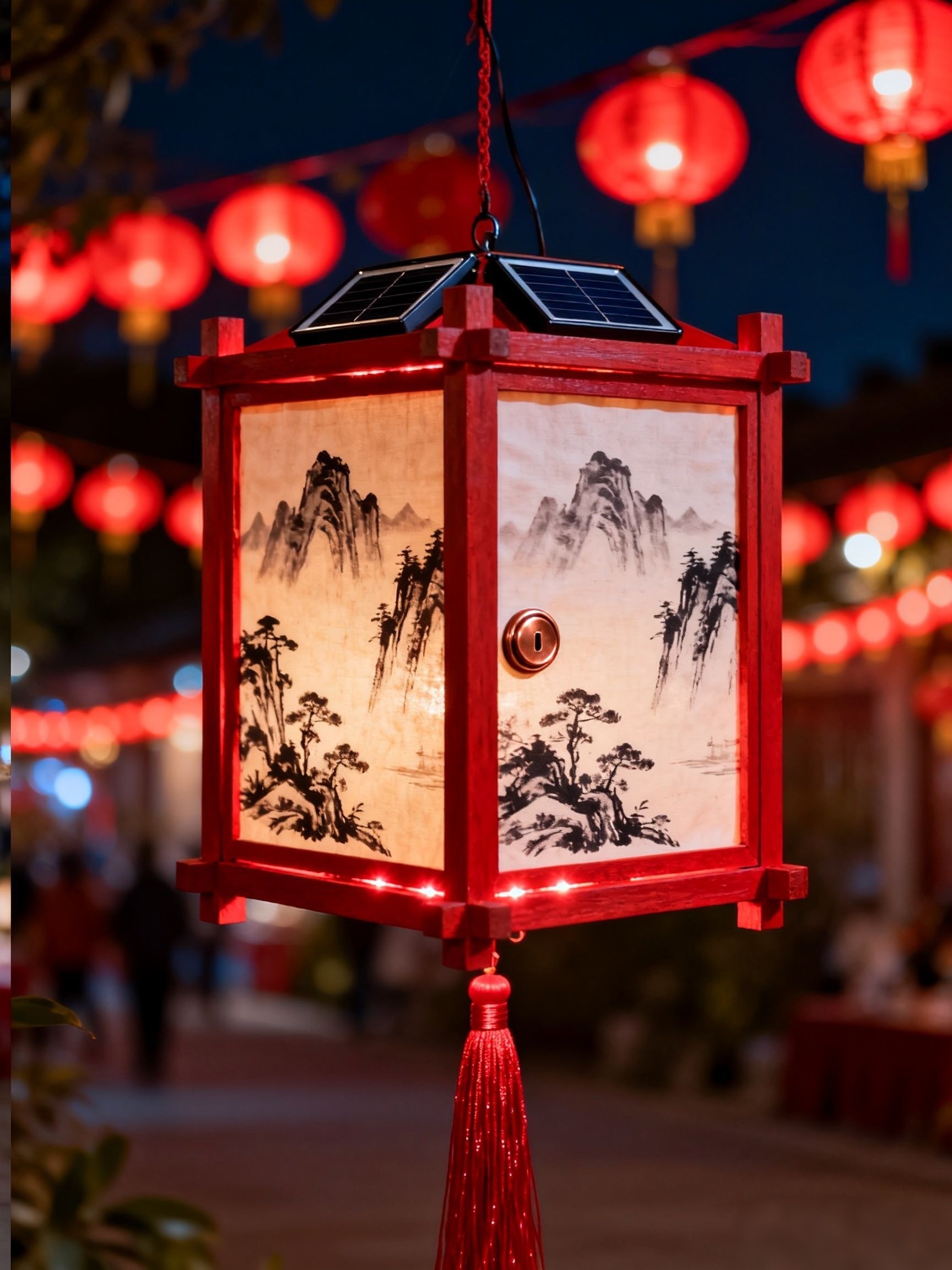
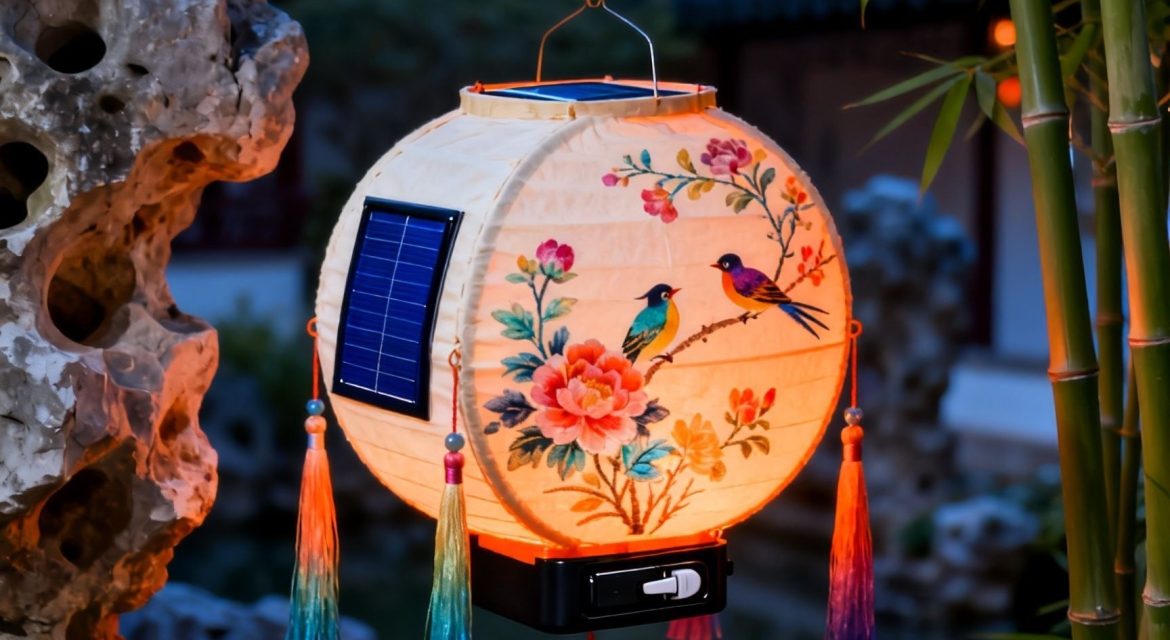
Solar lanterns come in diverse designs—from classic Chinese-style paper lanterns (with flame-retardant fabric) to modern metal lanterns (rust-resistant aluminum) and collapsible silicone models (great for camping). For long-term outdoor use, prioritize corrosion-resistant materials like stainless steel or powder-coated metal. Indoor decorators might prefer glass or fabric shades that diffuse light softly.
II. 10+ Creative Uses for Solar-Powered Lanterns
The beauty of solar-powered lanterns lies in their versatility—wireless and energy-free, they adapt to almost any scenario. Here are our favorite creative applications:
1. Indoor Decoration: Warmth Without Wires
- Entryway Welcome: Place a pair of metal solar lanterns on either side of your front door—they automatically light up at dusk, greeting guests with a cozy glow.
- Bedroom Ambiance: Use a small fabric solar lantern on your nightstand instead of a table lamp—its soft light won’t disrupt sleep, and it charges during the day by a window.
- Shelf Styling: Tuck mini solar lanterns between books or plants on shelves—they add depth and warmth to your living room without cluttering outlets.
2. Outdoor Living: Transform Your Yard & Patio
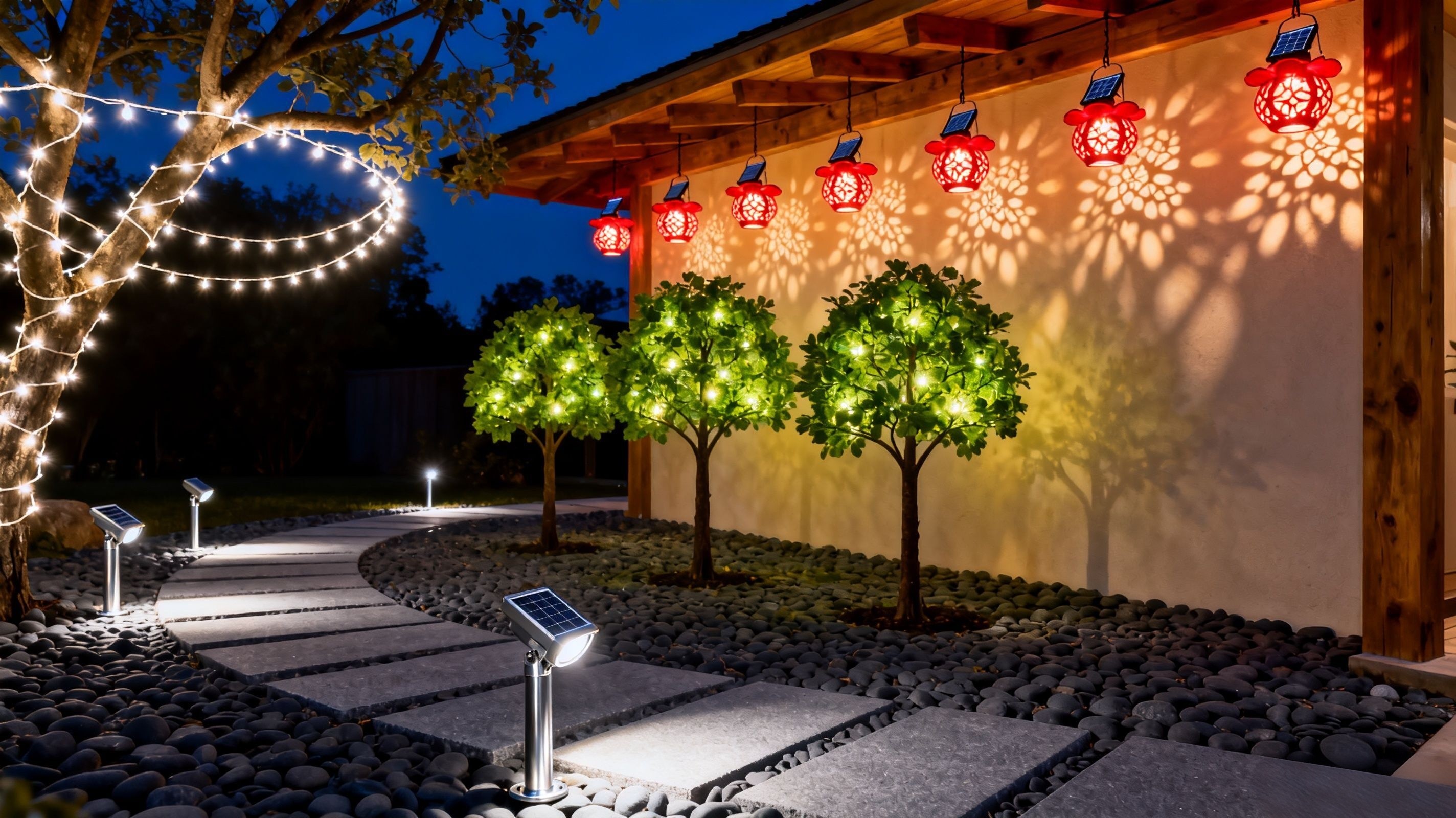
- Pathway Lighting: Line your garden path with low-profile solar lanterns—IP65 rating ensures they survive rain, and their warm light guides feet safely at night.
- Patio Dinner Party: Hang string solar lanterns above your dining set or place larger lanterns on side tables—no extension cords means more space for guests.
- Poolside Glow: Use waterproof floating solar lanterns in your pool—they create a magical reflection after dark and are safe for kids and pets.
3. Special Scenarios: Beyond Daily Use
- Camping & Hiking: Collapsible solar lanterns are a camper’s best friend—charge them during the day, then use them for tent lighting or late-night hikes. Many are lightweight (under 500g) and include carabiners for hanging.
- Holiday Decor: For Christmas, wrap solar lanterns around your tree or hang them on your porch—no need to untangle cords. For Halloween, use orange-glow lanterns to line your walkway.
- Emergency Lighting: Keep a high-lumen solar lantern in your emergency kit—during power outages, it provides hours of light, and the USB port can charge your phone.
- Charitable Use: As seen in initiatives supporting communities without reliable electricity, solar lanterns offer safe, affordable lighting for children studying at night or families cooking after dark.
III. Maintenance Tips: Extend Your Solar Lantern’s Lifespan
With proper care, a quality solar lantern can last 3-5 years. Follow these simple tips to maximize its lifespan:
- Keep the Solar Panel Clean: Dust, dirt, or leaves on the panel reduce charging efficiency. Wipe it gently with a damp cloth every 2-3 weeks—avoid harsh chemicals.
- Charge Fully Before First Use: New lanterns often come with partially charged batteries. Place them in direct sunlight for 8-10 hours to fully charge before using.
- Store Properly in Winter: If you don’t use your lantern in cold months, store it indoors in a dry place. Charge it fully every 1-2 months to prevent battery damage.
- Replace Batteries When Needed: When runtime drops by 50% or more, replace the battery (use the same voltage and capacity as the original). Most lanterns have easy-access battery compartments.
IV. Frequently Asked Questions (FAQ)
- Q: How long does it take to charge a solar lantern?A: Typically 6-8 hours in direct sunlight. Cloudy days may extend charging time to 10-12 hours. USB charging takes 2-4 hours.
- Q: Will solar lanterns work in winter?A: Yes, but cold temperatures (below 0°C/32°F) reduce battery efficiency. Place the panel in direct sunlight (even through a window) and expect slightly shorter runtime.
- Q: Can solar lanterns stay on all night?A: Most models with 1000mAh+ batteries can stay lit for 8-12 hours—enough to last through the night. Use the dimming mode to conserve energy if needed.
- Q: Are solar lanterns safe around kids and pets?A: Yes! LED bulbs stay cool to the touch, and high-quality models use non-toxic, flame-retardant materials. Avoid cheap lanterns with small parts that could be a choking hazard.
Click to customize the product